Water Rights for Springs

Can I Use My Spring in Oregon Without A Water Right of Use?
Oregon Water Resources Department’s (“OWRD”) is ratcheting down on new applications for surface and groundwater sources. Consequently, Oregonians are looking at those uses exempt from water righting by OWRD. Different exemptions apply whether the use is considered surface or groundwater. So what are the water right requirements for springs?
We have previously provided information on groundwater exemptions. You can access that information here: Domestic Groundwater Exemption – Schroeder Law Offices, PC
Surface Water or Groundwater?
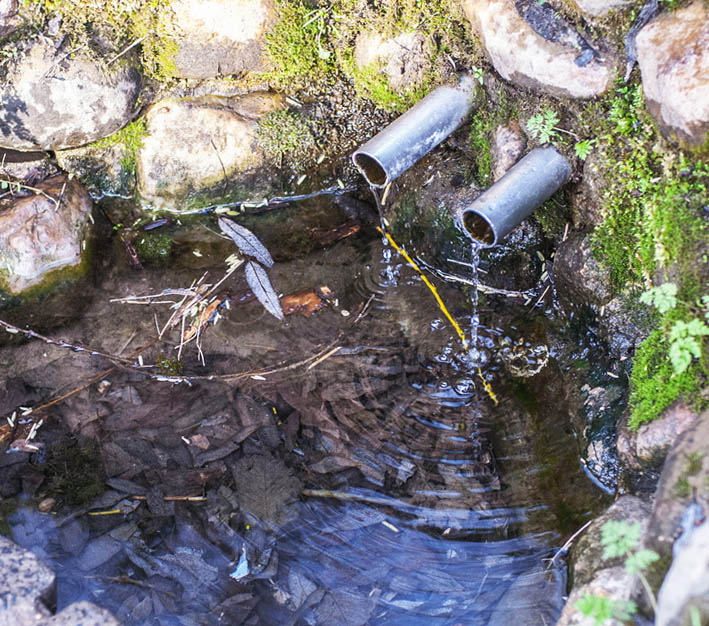
A spring might be a groundwater source. That would apply particularly if its artesian pressure required a spring box constructed below the surface. Such a spring box may be considered a hand-dug “well”. In that case the groundwater exemptions would apply, impacting water rights related to the spring.
Or, a spring might be a surface water source. That might apply if the spring does not have a spring box constructed below the surface. Whether such a spring surface water source is exempt from permitting under ORS 537.800 requires that “under natural conditions the surface water does not form a natural channel and flow off the property where it originates anytime of the year.” Hence, water rights may still be necessary depending on conditions.
What Does the Statute Say?
Like any good lawyer, we must break this ORS 537.800 statute into required elements which are:
- What are the “natural conditions”? This means generally, if there was no infrastructure (no spring box or piping) during the wettest time of the year.
- Does the water flowing from the spring under these natural conditions form a channel? A channel can be a rivulet that only flows occasionally, ie in the wettest time of year during a spring freshet.
- Does the spring water flow off the landowner’s property on which the spring originates and will be used? With the division and development of parcelling of property this might be a significant hurdle.
If each of the three elements above can be met, what types of uses are exempt under this spring water exemption? In truth, the statute does not limit the type of use. However, if the flow does not form a channel that runs off the property it is a logical conclusion that there will not be sufficient volume for irrigation or a commercial use, raising questions about water rights for the spring.
Conclusion
From a legal perspective it is very difficult to satisfy the ORS 537.800 requirements for a surface water exempt spring use for more than a domestic use. From a technical standpoint, we would employ a hydrogeologist to determine the “natural conditions” particularly where infrastructure has already been established and may be difficult otherwise to assess the facts related to the legal requirements surrounding water rights for springs.