Water on a Sailboat

How a water lawyer thinks about using water on a sailboat…..
Using water aboard a sailboat demands thoughtful stewardship. It’s not just for the crew’s comfort, but as a microcosm of the larger challenges in water law and rights. On deck, with a fill port labeled “WATER” and a hose snaking in, the process may appear simple. Yet, beneath this simplicity lies a world of complexity that water lawyers know all too well—ownership, allocation, purity, conservation, and compliance.
Water’s Legal Status at Sea
Aboard a yacht, water transforms from a public right into a private trust. While most marinas offer potable water at docks, the legal status shifts once transferred. That water—whether flowing from municipal sources or filtered from brackish harbors—becomes the responsibility of the vessel owner. It becomes subject to health regulations and port rules. International voyages may bring further complexity, as treaties and port-state controls dictate the right to access and use freshwater, sometimes limiting refills due to scarcity or fees.
Allocation and Conservation
Through a legal lens, the onboard water tank is a miniature “rights system.” Each crew member’s access depends not just on physical plumbing, but implicit agreements about rationing. In water law, this is reminiscent of riparian rights: those on board each have access, but only to their fair share. Waste or overuse could deny others their legal and practical right. Many sailboat owners have procedures—written or oral—reflecting the sort of allocation systems ingrained in water law, promoting fairness and sustainability.
Purity, Pollution, and Liability
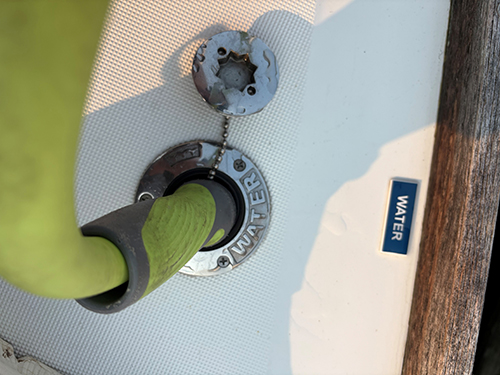
A major concern for lawyers is liability. The water fill on a sailboat (as shown in the image) must be safeguarded against contamination. Cross-threaded hoses, un sanitized tanks, and improper backflow devices are all red flags. Should illness arise from tainted water, liability could trace back to negligent handling or substandard marina supplies. Maritime law intersects with local public health statutes, imposing a duty of care. Proper labeling, regular tank cleaning, and adherence to best practices are as much about legal risk management as practicality.
Compliance with Port & Environmental Regulations
A sailboat’s water use is rarely free from legal oversight. Many ports require records of water usage, proof of non-contaminating practices, or the installation of anti-backflow equipment. Disposal of any black or grey water must comply strictly with the International Convention for the Prevention of Pollution from Ships (MARPOL), and violations can result in steep fines. A water lawyer’s advice here: always check the specific rules for water handling, especially when crossing regional or national boundaries.
Closing Thoughts
Water aboard a sailboat is a study in compact, portable law. From allocation to purity, risk to compliance, its stewardship is both essential and intricate—reminding all who go to sea that the right to water, though often taken for granted, is a privilege governed by rules as deep as the ocean itself.
Perhaps the final thought is that when you take Laura Schroeder on a sailboat, as Scott her husband did last month in the San Juan Islands, you will now have an idea of what pops into her head!