New Associate Attorney Jakob Wiley Defends Collective Aquifer Governance Agreements!

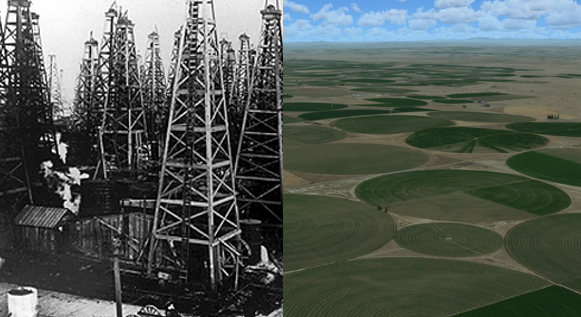 New Associate Attorney Jakob Wiley successfully completed his defense of Collective Aquifer Governance: It’s the Water and a “Hole” Lot More! on September 17, 2018, completing his Masters of Science in Water Resources Policy and Management. Jakob completed the Concurrent J.D./M.S. program between Oregon State University (“OSU”) and the University of Oregon School of law, https://gradwater.oregonstate.edu/concurrent-jdms-degree-program. Jakob’s successful defense of his research paper marked the capstone of his MS studies at OSU.
The paper unravels the differences between the current paradigms in groundwater and aquifer governance, showing that the present focus on groundwater has struggled to meet the challenges of true aquifer governance. Aquifers are composed of a variety of resources, like storage spaces, thermal properties, chemical and biological contaminants, and hydraulic pressures. Jakob coins the term transresources to describe these components, inspired by transdisciplinary approaches in academia. To achieve true aquifer governance, transresources must be included in the governance strategy. Unfortunately, traditional groundwater management only attempts to address these issues through the lens of groundwater regulation.
To provide a guide, Jakob’s paper compares aquifer governance with unitization agreements used in the oil and gas industry. These agreements were developed to counter the inefficient, competitive, and costly over-drilling of wells in the early years of hydrocarbon development. Unitization agreements are fundamentally a contract between reservoir owners. Unitization agreements convert the right to pump into shares of the resources present in the reservoir. By pooling the rights to withdraw oil and gas into a “unit”, a more equitable, efficient, and voluntary governance system is created, while also incorporating any pumping, spacing, and pressure management laws.
Jakob’s research translates this agreement approach into a system of aquifer governance. The theoretical approach would create an agreement among aquifer users, allowing them to contractually change the incentives and use patterns of the aquifer. For example, conversion from flood to sprinkler irrigation can improve “efficiency” but also dramatically reduce artificial recharge of the aquifer. A “collective aquifer governance agreement” – Jakob’s translation of a unitization agreement – could be used to incentivize groundwater users to adopt efficient sprinklers while incentivizing beneficial activities, like incidental aquifer recharge from flood irrigation, improving the overall sustainability of the aquifer system.
The key feature of a collective aquifer governance agreement is the design of shares. By allocating shares to each transresource, the system of water allocation can reflect the scientific and physical effects of groundwater and aquifer resource use (like geothermal energy production, storage, subsidence, in situ bioremediation, ect). Directly connecting rights with physical effects of aquifer use can internalize any negative externalities of aquifer use, when properly designed, and could support a conjunctive surface and ground-water (or any other transresource) market.
Jakob’s work on this topic will continue as he works with Dr. Todd Jarvis of OSU on an upcoming book expanding the theory and providing guidance for the next stage in groundwater management: collective aquifer governance, showing oil and water really do mix!
Jakob’s complete research paper is publicly available at the following link: http://ir.library.oregonstate.edu/concern/graduate_projects/pn89dd30b
Stay tuned to Schroeder Law Offices’ Water Law Blog for more news that may affect you!