Portland’s Big Pipe Project

The City of Portland’s Big Pipe Project:
What it Does and Why it Maters
The City of Portland’s Big Pipe Project was a major effort to reduce the amount of pollution entering the Willamette River and the Columbia Slough. This project cost about $1.4 billion and took 20 years to finish. Thanks to this work, Portland has reduced combined sewer overflows (CSOs) by 94% into the Willamette and 99% into the Columbia Slough.
Even with these improvements, a few overflow events still happen during very heavy storms.
Why Stormwater Was a Problem Before the Big Pipe
Portland has a combined sewer system in many areas. That means sewage and stormwater flow through the same pipes. When big rainstorms hit, millions of gallons of stormwater rush into the system at once. Before the Big Pipe Project, this caused sewage and pollutants to overflow directly into local rivers many times each year.
To reduce this problem, the City first worked to keep stormwater out of the sewer system whenever possible. Beginning in 1991, Portland:
- Built new stormwater-only pipes
- Redirected small streams into the Willamette River
- Captured runoff from streets and buildings
- Sent stormwater to Ramsey Lake, a constructed wetland that helps clean the water
- Increased the use of trees, gardens, and other green spaces to absorb rain naturally
All these steps helped lower the amount of water entering the sewer pipes and reduced the chance of overflows.
How Portland’s Big Pipes Work
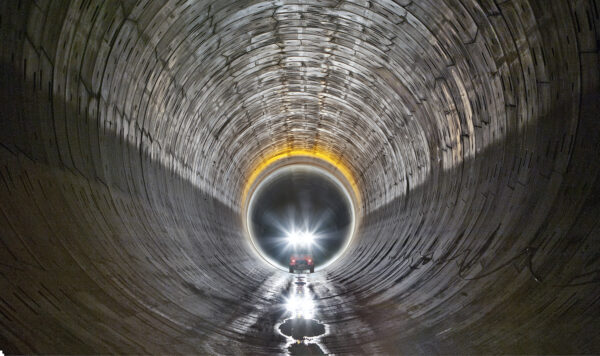
Portland now has three major “Big Pipes”:
- Columbia Slough
- West Side
- East Side
Together they stretch 12.5 miles and carry combined sewage to the Columbia Boulevard Wastewater Treatment Plant. These pipes store and move huge volumes of water during storms so the treatment plant isn’t overwhelmed.
This system has greatly reduced the amount of untreated wastewater that reaches the Willamette River and the Columbia Slough.
However, during extreme weather—like the December 9, 2025 ‘atmospheric river’ storm, which dropped more than five inches of rain—the system can still reach capacity. When that happens, overflows may release polluted water into the river. The good news is that Portland now sees only about four overflow events per year, compared to around fifty before the Big Pipe Project was completed.
Conclusion
The Big Pipe Project was a huge, long-term effort involving city agencies, engineers, and the people of Portland. Since its completion in 2011, it has made the city’s rivers much cleaner and safer. While occasional overflows still occur during major storms, the combination of stormwater diversion, green infrastructure, and increased pipe capacity has made a major positive impact on local water quality.
Stay tuned to Schroeder Law Offices’ blog for more updates on water issues in the Pacific Northwest!