Corner Crossing Comes to Montana

While the legal journey may have ended for Iron Bar Holdings and Brad Cape and his companions, the saga continues on other legal fronts. On May 14, 2026, two conservation organizations filed a lawsuit in Lewis and Clark District Court in Montana. The purpose: to clarify corner crossing law in the state.
Federal Corner Crossing Lawsuit
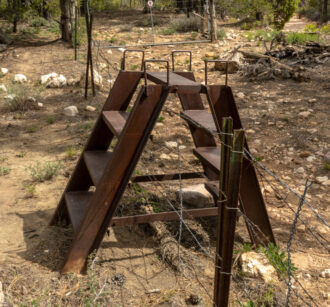
The issue of corner crossing gained significant publicity in 2025 due to a case captioned Iron Bar Holdings v. Cape, et al. It was filed in the Federal District Court for the District of Wyoming. The case centered around a group of hunters accessing checkerboarded Bureau of Land Management (“BLM”) land. They did so via the touching corners of public land (“corner crossing”). The case was initiated by the adjacent private landholder Iron Bar Holdings, that sued the hunters for trespass to its private land and airspace.
After losing before the District Court, Iron Bar Holdings appealed the case to the Tenth Circuit Court of appeals. The Court of Appeals upheld the District Court decision. It found that while corner crossing may constitute trespass under Wyoming State Law, it was overridden by the federal Unlawful Enclosure Act. Iron Bar sought review of the case before the United States Supreme Court, but the Court denied review. As a result, the Tenth Circuit Court of Appeals decision stands in Tenth Circuit states. Those include Colorado, Kansas, Oklahoma, New Mexico, Utah, and Wyoming. However, BLM owns large areas of land in Western States outside of the Tenth Circuit. While Iron Bar Holdings is highly persuasive outside of the Tenth Circuit, it is not binding law.
Montana’s Position on Corner Crossing
Following Iron Bar Holdings, public land advocates encouraged Montana to follow suit. However, on May 13, 2026, Montana Lieutenant Governor Kristen Juras gave a presentation to the Montana Environmental Quality Council on this issue. Juras presented that corner crossing potentially violates multiple Montana State laws. Those include civil trespass, criminal trespass, and hunting without landowner permission. Juras’s presented five key takeaways:
- The Iron Bar Holdings ruling only applies to Tenth Circuit states;
- The ruling only applies on federal, not state public lands;
- The ruling does not allow corner crossing if there is a road, trail, or other access to the federal land;
- Hunters must locate a physical survey marker before stepping over a corner, digital maps or tools are not sufficiently accurate; and
- Hunters, their gear, and any game carcasses must not touch private property while corner crossing.
Juras represented the State’s position, as of November 2025. She said “corner crossing remains unlawful in Montana”, Montanans should continue to obtain private property owner permission before crossing corners, and game wardens are authorized to issue citations for trespass.
The Lawsuit
The next day, Backcountry Hunters & Anglers (“BHA”) and Public Land and Water Access (“PLWA”) filed a lawsuit against Montana Fish, Wildlife, & Parks and its director Christy Clark. A copy of the Complaint is available on BHA’s website.
In their lawsuit, BHW and PLWA challenge an internal policy memorandum stating “corner crossing remains unlawful in Montana”. The Complaint argues the memo is a “rule” adopted without complying with the Montana Administrative Procedures Act. It further seeks a declaration from the Lewis and Clark District Court that the agency’s “memo” and position that corner crossing is illegal is inconsistent with state law, violates the Public Trust Doctrine, and is preempted by the federal Unlawful Enclosures Act as outlined in Iron Bar Holdings.
The case is still in its infancy, and the State has not filed an Answer to BHA and PLWA’s allegations. However, the case’s progression and outcome may inform how corner crossing is applied by other Western States absent a Supreme Court ruling providing binding law across the nation.