101 on Forfeiture vs. Abandonment Under Prior Appropriation Doctrine

Forfeiture

We’ve all heard “Use it or Lose it” referring to the Prior Appropriation System.  The use it or lose it concept is the term we use for legal forfeiture which will apply to your water rights of use depending on your jurisdiction and type of water right.  Generally, this concept requires beneficial use of water appropriated under state law over a specific time interval.  In some states (like Nevada and Oregon), “use it or lose” is statutorily controlled, the law describes when a water user must exercise their water right of use.  In Oregon both groundwater and surface water certificates require water use once for every five consecutive year time frame. ORS 540.610. In Nevada, the statute provides that only groundwater certificated uses are subject to forfeiture for non-use if not used at least once every five years.  NRS 534.090. Thus, if you last used your certificated water right of use in 2011, you best put whatever water is available for appropriation under your certificate in place for 2016!  Make sure to use it so you are not at risk of losing it!

Abandonment

Use it or lose it as defined by the water code should not be confused with abandonment, a court made doctrine that may be more broadly applied.  Abandonment will cause cancellation of a water use by intention not to use.  Intention can be established by expression as in a written document or by a physical act.  The physical act of abandonment can include placing a permanent structure over or on top of water righted lands.  If you plan to build the next industrial sized plant, packing shed, scale house, onion storage, fill in your ditch, or take out your diversion structures, etc., you should file that water use transfer or change application prior to any construction!

While this gives you the very “basic” overview of these two legal concepts, Schroeder Law Offices can provide a more detailed explanation


World Environment Day: Sunday, June 5th

Water resource users are some of the most environmental aware stewards since they must count every precious drop of water necessary to feed the world and provide safe drinking water. In the United States, we celebrate Earth Day: We have a bike-to-work week, we have recycling and environmental preservation programs in our communities, the list goes on. World Environment Day is the United Nations’ all-encompassing campaign that promotes these types of environmentally conscious activities and events and serves as a global platform for public outreach. The UN considers World Environment Day (“WED”) an important holiday for encouraging worldwide awareness and action for the protection of our environment.  Also considered “The People’s Day,” the UN encourages this to be “a day for doing something to take care of the Earth or to become an agent of change. That ‘something’ can be focused locally, nationally or globally; it can be a solo action or involve a crowd – everyone is free to choose.” Each year, the UN organizes WED to revolve around a particularly pressing issue, this year they’re highlighting illegal wildlife trade with a themed slogan: “Go Wild for Life.” Activities are encouraged globally; in 2015, WED saw a total of 2,861 registered activities with 1.26 million people participating worldwide.  Participants can visit the WED online site to register their environmental activities to be shared worldwide on a community map, with hopes of inspiring others with ideas or notable contributions.  For those who wish to participate in the World Environment Day celebration, the UN offers this toolkit for a successful, positive route to taking action and encourages participants to share their activities. While Schroeder Law Office’s work in water resources is a bit removed from the 2016 theme “Go Wild for Life” we can say that we “Go Wild for Water.”  We will celebrate this year’s World Environment Day by continuing to support our clients in smart and efficient beneficial use of our water resources.


The End of the Prior Appropriation Doctrine?

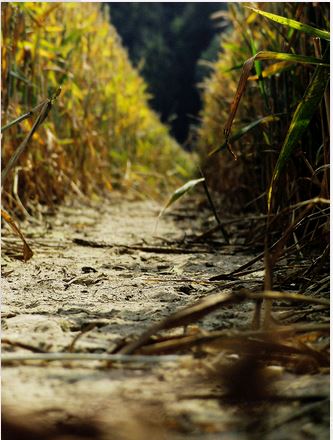
dry groundThe debate continues on the prior appropriation system. During the 2016 Family Farm Alliance Annual Conference, the Alliance’s 2015 report on the prior appropriation doctrine raised some debate. This debate, now focusing on Nevada’s prior appropriation system, was again raised in equal vigor during the 2016 Nevada Water Resources Association annual conference. While many argue the system fundamentally works, some commenters took the stance that the prior appropriation doctrine was flawed and should be reconsidered.

One alternative suggestion presented during these discussions was to adopt the Australian Model which changes a water right to a water share, and strives to entitle these water license holders to a specific share in the available water and to take water at specific times, rates or extraction points. However a true understanding of prior appropriation provides for water use under these circumstances, with the main difference being, in a short water year, the difference class of shareholders receive different allocations. So instead of a month, day and year priority to govern who receives their water first, the Australian Model groups all users into classes of shares with perhaps 3-5 classes all together depending on the stream system. What we did not hear about was how the Australian system handles conjunctive management calls within these class-share systems.

We suspect this debate will continue throughout the western United States as climate change and the drought continue.

Co-authored by Therese A. Ure


Executive Order Makes California Water Conservation Permanent

On May 9, 2016, Governor Jerry Brown of California signed an executive order making certain water conservation measures permanent. The measure is meant to build on temporary emergency water restriction in place since last year. Brown’s office reports that “between June 2015 and March 2016, Californians reduced water use by 23.9 percent compared with the same months in 2013 – saving enough water to provide 6.5 million Californians with water for one year.”

The executive order primarily implements long term planning solutions for local drought and directs the California State Water Resources Control Board to develop further emergency provisions should the drought continue. This new action is summarized in the Governor’s plan to “Make Conservation a California Way of Life.”

More specifically, the plan requires additional monthly reporting by urban water suppliers, requiring information on use, conservation, and enforcement. The provisions further claim to eliminate water waste, prohibiting hosing off sidewalks, driveways, at home washing of autos using hoses not equipped with nozzles, and watering lawns in manner that causes runoff.  The Water Board will also work to minimize system leaks responsible for wasting more than 700,000 acre-feet of water per year. While already strictly regulated, agriculture use is also heavily considered, updating the requirements for Agricultural Management Plans allowing irrigation districts to quantify customers’ use and appropriately plan for shortages.

While water restrictions and regulations are becoming more permanent, Californians will continue to face heavier scrutiny. It is ultimately the user who will face the increased burden, however, the hope is that the systems themselves will promote efficiency, providing a better use of water across all systems and types of use.

For more information on the executive order and its full text, please visit https://www.gov.ca.gov/news.php?id=19408.


Nevada Cracks Down on Water Rights of Use

Nevada is taking a close look at water rights of use, thus now is the time to make sure your use rights are in good standing. With a shuffling of basin engineers within the Nevada Division of Water Resources, water rights are being reviewed to determine compliance!

  • Are your rights of use in your name? If not, it is time to bring the ownership current as required under Nevada Law!
  • If you have a permitted right, are you diligently developing your use to bring it towards certification?
  • If you are not using your groundwater, are you at risk for forfeiture?
  • Do you have a metering requirement? if yes, is your meter installed and are you recording monthly measurement readings?

All of these items and more are under scrutiny by the State Engineer’s office. In the last few months we have seen a number of forfeiture letters go out to unsuspecting water users, don’t let this be you! Do not wait to review your water use rights to ensure they are in compliance!


Sage Grouse Land Use Plans and Law Suits

On September 18, 2015, the Bureau of Land Management (“BLM”) and United States Forest Service (“USFS”) issued Records of Decision (“RODs”) related to land management in support of sage grouse populations on lands managed by the agencies. The RODs put land use plans in place in lieu of listing sage grouse under the Endangered Species Act (“ESA”). The land use plans are extremely long and complicated, and are summarized in the article Sage Grouse Conservation without an Endangered Species Act Listing: Digging into the National Greater Sage Grouse Planning Strategy Records of Decision, available at: http://www.water-law.com/water-rights-articles/sage-grouse-conservation/.

In general, producers are skeptical that existing activities will not be affected by the new land use plans, as the agencies promise, and are worried about increased fire risks due to the plans. Further, the plans may prove more restrictive than an ESA listing. Parties in Idaho and Nevada have filed lawsuits to challenge the amended land use management plans. See: http://www.gov.idaho.gov/mediacenter/press/pr2015/2%20Feb/pr_61.html, and http://ag.nv.gov/News/PR/2015/Attorney_General_Laxalt_Issues_Statement_Confirming_the_Support_of_Nevada_Counties_in_Sage-Grouse_Lawsuit/.

Law suits involving sage grouse have not halted in the shadow of these new, comprehensive land use plans. On March 29, 2016, Western Watersheds Project (“WWP”) filed suit in the U.S. District Court for the District of Nevada against the BLM for approving fences within the Argenta Allotment in Nevada, claiming the approval violated the National Environmental Policy Act (“NEPA”) and the Administrative Procedures Act (“APA”) and that alternatives to fencing existed that BLM should have considered. WWP also alleges that the BLM sage grouse use plan required BLM to consider certain alternatives. To view a copy of WWP’s complaint, visit: https://drive.google.com/file/d/0B1T2j7JW1SeoWV9FbVh2SW1wdEU/view. WWP’s law suit comes on top of other attacks against grazing in the Argenta Allotment that are currently being litigated.

Be sure to stay tuned to Schroeder Law Offices’ Water Law Blog for more news that could affect you!


Sage Grouse Workshop

06-14 Greater Sage GrouseBLM’s Sage Grouse Plan Collaboration-Implementation is underway.

As part of the BLM’s effort to ensure collaboration and engagement during implementation of the sage grouse plans, the BLM is sending out invitations to stakeholders to begin the dialogue.

These invitation only meetings will occur on:

April 22nd in Salt Lake City, UT

April 26th in Boise, ID

April 27th in Reno, NV

April 28th in Redmond, OR

You are requested to RSVP at the link below to reserve your spot by April 15, 2016, so that we can set up the workshop for the appropriate number of participants:

http://bit.ly/SageGrouseWorkshop

While space is limited for these invite-only dialogues, BLM plans to conduct additional public meetings later this spring and summer.  Once these public meetings are scheduled, information will be available on: http://www.blm.gov/id/st/en/prog/wildlife_and_fisheries/greater_sage-grouse.html.  If you are interested in receiving an invitation to these meetings, please contact your state BLM office.


Renewable Energy Demand Grows; Hydro Power Faces Challenges, Opportunities

sunsetfallspanoIn the Northwest, a substantial percentage of our power comes from hydroelectric projects. California’s new legislation requires utilities to provide electricity from 50% renewables by 2030, and Oregon’s new legislation requires the same by 2040. The hydro power industry is viewing these renewable standards as creating continuing demand for hydro power, but several trends are creating serious hurdles for the hydro power industry.

More large projects are going through FERC re-licensing than those large projects that would seek first-time licenses. The result is that older projects are becoming subject to new instream flow and fish passage requirements. The older projects going through re-licensing are usually required to make facility upgrades, and regulate the projects to send more water downstream.

Additionally, climate change means that water patterns are also changing. Scientists predict that more precipitation will fall during the winter, with less flows from snow pack runoff and precipitation in the spring and summer. Predicted changes will create a large burden on facilities that provide flood control, possibly exceeding the amounts of water the facilities were designed to withstand. Further, flows released to meet instream flow requirements in the spring could mean that water is not available for power production and water users later in the season when there is a larger demand.

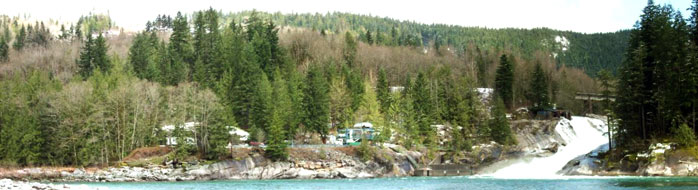
Moreover, new in-stream storage projects often meet substantial opposition from environmental groups.  Therefore, some innovative hydroelectric developers are constructing out-of-stream projects. For example, the Snohomish Public Utility District in Washington is reviewing an opportunity to construct the Sunset Fish Passage and Energy Project, http://www.snopud.com/?p=1956. An underwater intake structure would divert water from the South Fork Skykomish River, and would flow one-half mile through an underground tunnel to the PUD powerhouse, thereafter emptying back into the river. The PUD would also update the Washington State Department of Fish & Wildlife’s trap-and-haul facility as part of the project. In this way, the PUD proposes an innovative way to create hydro power while satisfying those who are typically opposed to new projects.

Schroeder Law Offices is assisting a client to develop a closed-loop hydro power project using existing agricultural groundwater use rights. It is the first of its kind in Oregon, and will not have undesired effects on surface water streams or fish passage. These types of innovative hydro power designs will need to be used more and more if hydro power is to keep a foothold in renewable energy portfolios in the West.

Stay tuned to Schroeder Law Offices, PC’s Water Law Blog for water news that could affect you!


2016 Irrigation Season

Water Year 2016

Spring is approaching on the West Coast and we all know what this means: watering season!  Time to check your sprinkler systems for leaks, read and record meters, and make sure your system is ready for spring irrigation.

Though forecasts were set for an “El Niño” winter on the West Coast, projections from the March Nevada Water Supply Outlook Report, issued yearly by the Natural Resources Conservation Service, suggest that the 2016 water year is not yet the end of Nevada’s drought.  Currently, (as of March 1, 2016) the Bridgeport Reservoir on the East Walker River is at 24.4 percent full, while the Topaz Reservoir on the West Walker River is at about 28.6 percent full.  Despite the two reservoirs having about twice as much water as they did at this time last year, streamflow numbers as of April 1 will calculate the upcoming curtailment order on groundwater rights issued by the Nevada State Engineer’s Office.

After several years of drought, the influx of melting snow pack will provide some relief for Nevada residents, but mindfulness is going to be key.  In Pershing County, the newly improved Rye Patch Reservoir is set to provide water to Lovelock Valley farmers but the county’s water conservation district manager recommends the 2016 irrigation season be postponed.  After consecutive years of drought, the dry ground in irrigation ditches and canals will absorb much of the water initially released from the reservoir, until at least another 10-12,000 acre-feet of water are available for use.

Ranchers in Northern Nevada are facing designations proposed by state water officials last week that order groundwater well metering, meaning more monitoring, regulation, and study of the Humboldt River Basin’s limited resources.  As orders such as these become more common, residents can do their part by monitoring individual irrigation systems and meters.


Announcing Sarah Liljefelt as Junior Partner!

Sarah Liljefelt

Schroeder Law Offices is proud to announce Portland’s Managing Attorney, Sarah Liljefelt, has been promoted to Junior Partner.  Sarah has been with the firm since 2009 as a law clerk, and joined the firm full time after receiving her Juris Doctorate and Certificate in Environmental and Natural Resources Law from Northwestern School of Law of Lewis and Clark College in 2010.

Sarah’s practice focuses in the areas of water rights, real property law, and litigation, licensed in both Oregon and California.  As a member of the Oregon State Bar Environmental and Natural Resources Law Executive Committee, Sarah has published extensively on natural resources law and related topics.

In addition to her focused practice areas, Sarah is active in the Portland community.  She is currently a Vice President of Oregon Cattle Women, and competes on the Oregon Women Lawyer’s “Dragonflies” dragon boat team.

Sarah was born and raised in California during a time of serious drought and is passionate about the importance of water resources for people, animals, and the production of food in the face of supply variations.


Nevada Drought Forum Releases Recommendations Report

Upon facing the fourth year of consecutive drought, the Nevada Drought Forum formed in April 2015 by Nevada Governor Brian Sandoval to assist with water resource challenges in the State of Nevada. The Forum was comprised of members representing various governmental and quasi-governmental agencies in charge of managing water resources in the State. In September 2015, a Drought Summit was held at the Nevada Legislature, where those involved discussed many of the drought problems Nevada is facing, and numerous presentations were offered on these issues. At the conclusion of the Forum activities, and in December 2015, the Governor was presented with a Recommendations Report summarizing the conclusions made by the Form, and proposed future action.

The Drought Forum recommendations come in seven (7) categories including: 1) Water Conservation, 2) Nevada Water Law, 3) Monitoring and Research Data, 4) Financial and Technical Assistance, 5) Supply Augmentation and Long-Range Planning, 6) Information Sharing and Outreach, and 7) Drought Declarations/Emergency Actions. Each category offers specific suggested action items for the Governor’s consideration. Strategies include requiring meters on all groundwater connections, tiered rate structures, updates to Nevada water law, judicial education on water issues, and refinement to drought criteria, among others.

At this stage, no specific action is taking place on the issues presented; however, the conversation is started on where Nevada will head in response to ongoing drought conditions. While real action can sometimes take years to implement, the Recommendations come as a positive sign that Governor Sandoval is interested in suggested strategies advocated by water professionals around the state. There remains time for those interested in becoming involved to voice their concerns and positions with the Governor in upcoming events dedicated to this ongoing discussion.

For more information about the Governor’s Drought Form visit http://drought.nv.gov/.

For Additional information concerning the Recommendations Report visit http://drought.nv.gov/News/Nevada_Drought_Forum__Recommendations_Report_-_December_2015/.


California’s New Water Measuring, Recording & Reporting Law

California Governor Brown signed Senate Bill 88 into law on June 24, 2015. Part of that Bill amended the California Water Code to require that all persons who divert 10 acre-feet or more of water per year after January 1, 2016 must install a water measuring device to measure the rate of diversion (including diversion into and out of storage). Water users must report installation to the Water Board, as well as provide evidence that the measuring device is functioning properly at five-year intervals. Water users must maintain records of diversion at time intervals of one hour or less (in some cases) and total amounts of water diverted.

Annual diversion reports must be submitted to the Water Board, and the law states: “Compliance with the applicable requirements of this section is a condition of every registration, permit, or license.” The new law imposes civil fines in an amount not to exceed $500 per violation, per day, which may be enforced civilly through the superior court, or administratively by the Water Board. The Water Board will provide forms for reporting.

On January 19, 2016, the Water Board adopted emergency regulations to implement the new water measuring law. Those regulations were sent to the Office of Administrative Law for approval. Of note, the proposed regulations give the Deputy Director of the Division of Water Rights the authority to require monthly, daily, or more frequent reporting in times when there are insufficient flows to support all diversions. Additionally, the regulations propose a phased approach that takes into account the amount of water diverted, with larger diverters needing to comply with more stringent requirements than smaller diverters.

The recent drought spurred California law makers to enact this law that will mark a drastic change in the way water users operate. The Water Board reports that this new measurement, recordkeeping, and reporting law will apply to approximately 12,000 water users in California. The Water Board hopes that the new law and regulations will improve water use regulation and planning. Industry groups, including the California Cattlemen’s Association, oppose the regulations.

In Oregon, the Water Resources Department has phased in water use measuring, recordkeeping, and reporting requirements into new water use permits that are issued. California’s new law and regulations impose a new condition on existing water use rights, raising red flags about regulatory takings.

For access to S.B. 88 and the draft administrative rules, visit: http://www.waterboards.ca.gov/waterrights/water_issues/programs/measurement_regulation/.

Stay tuned to Schroeder Law Offices’ Water Blog for more news that may affect you!


Forest Service Changes It’s Tune on Transfer of Ski Area Water Rights

Final rulemaking related to Forest Service permits for Ski Area Water Rights was released on December 30, 2015. Unlike an earlier directive passed in 2011, the Ski Area Water Clause will not require ski areas to transfer water rights to the federal government as a condition of operating on public land. Instead, the new clause will require ski areas to prove there is a “sufficient quantity of water to operate a ski area.” The new directive will take effect on January 29, 2016.

In 2011, sparked by the concerns that ski areas might sell their water rights in lieu of using them to operate due to rising temperatures and water scarcity, the Forest Service issued a directive that would require joint ownership of water rights by ski areas and the United States. Since water rights are typically held by the lessee, this directive would have required a transfer of rights into shared ownership in some instances, and for water rights to be acquired in the name of the United States in others. The National Ski Area Association (NSAA) brought suit against the Forest Service challenging the directive on January 9, 2012, characterizing the directive as government overreach. In December, 2012 a federal judge agreed with the NSAA and ordered the Forest Service not to enforce the proposed rule.

The December 30th directive abandons the original proposal that ski areas transfer water rights to the federal government. Instead, after an extensive public comment period, the final directive requires an applicant for a ski area permit to submit documentation prepared by a hydrologist that demonstrates there is sufficient water to operate a ski area for the entirety of the ski area permit term. The final directive explains that “sufficient water to operate a ski area” means that under typical conditions, taking into account fluctuations in utilization of the authorized improvements, fluctuations in weather and climate, changes in technology, and other factors deemed appropriate by the applicant’s qualified hydrologist of licensed engineer, the applicant has sufficient rights or access to a sufficient quantity of water to operate the permitted facilities, and to provide for the associated activities to be authorized under the ski area permit in accordance with proposed operating plan.

Additionally, if there is a change such as a change in ownership, and a ski area water facility will not be primarily used for operating a ski area, the authorization for the facility under the ski area permit will be terminated and the facility must be removed from National Forest Service lands. Lastly, if a ski area permit is terminated or revoked, the holder must give a right of first refusal of the water rights associated with the permit to the succeeding ski area permit holder. If the water use right is jointly owned with the United States, the holder must give a right of first refusal to the government.

The stated goal of this new rule is to promote the long-term sustainability of ski areas on National Forest Service lands and the communities that depend on the ski areas for revenue. There are 122 ski areas that lease approximately 180,000 acres of lands managed by the Forest Service. Ski areas received about 23 million visitors annually, contributing $3 billion to local economies and supporting approximately 64,000 full and part-time jobs in rural communities. In the West, water use rights for many ski areas are business assets, property interests that operate as collateral when re-financing. One major criticism of the original rule, was that requiring water rights to be co-owned by the federal government would limit a ski area’s ability to control their assets and thus their ability to finance operations.

Thus, the directive ensures that ski areas not only have adequate water supply for operating, but that infrastructure to handle the water supply is used only for permitted purposes under the special use permit. Hailed as a success by both the Forest Service and the ski industry, these actions demonstrate a coordinated effort to eliminate the risk of sales or transfer of water rights that might prevent a ski area from operating in the future and ensure that water will remain available for ski areas across the West.


Nevada Wastewater Funding Approved by EPA

Wastewater

On December 22, 2015, the United States Environmental Protection Agency (“EPA”) announced funding of more than $19 Million for drinking water and wastewater infrastructure projects in Nevada. The program funds fall under Nevada’s Clean Water State Revolving Fund, and provides money for state projects that promote clean water through wastewater treatment projects and improvements to drinking water infrastructure in the State. The EPA’s Regional Administrator stated that “This substantial investment at the federal level helps communities develop the infrastructure needed for clean, safe drinking water and proper wastewater treatment. EPA is committed to protecting the water resources so important public health and Nevada’s economy.”

Funds supplied under the EPA program will go to provide financing for state projects such as upgrading septic systems to sewer, and renovations to wastewater treatment facilities to increase efficiency, as well as support projects for better and more efficient access to clean drinking water, such as water storage and water system upgrades. The funds this year will combine with over $200 Million in federal funding previously provided to Nevada’s Clean Water and Drinking Water State Revolving Fund since the project began. While the EPA’s influence can at times be controversial, federal funding is important to State projects, where both municipal and agriculture interests can often benefit from the funds supplied for needed water projects.

More information on the topic can be found at the EPA Web Site.


Resentencing Issue Clouded by Militia

The news of Dwight and Steven Hammond’s resentencing is an open platform for change in federal handling policies, but the fear incited by Ammon Bundy’s voluntary militia of protesters is clouding evidence that backs claims of federal government mismanagement. Protesters are against the Hammonds’ re sentencing and believe they were convicted unfairly under laws intended for acts of terror for which they’ve been given excessive sentences but are not explicitly calling upon the issue at hand, a reduction of the Hammonds’ sentences.

While much of the news coverage related to the Hammond family has broadcasted Ammon Bundy’s armed militia protest, the legal issue at its core is beginning to come into focus. Bundy and his supporters have set up camp on federal land, demanding that control over the asserted public land be remanded to its local people such as the Hammond ranching family. As the American Bar Assocation Journal suggests, the Hammonds became a cause celebre among anti-government activists in part because of mandatory minimum sentencing regarding disputed use of land with the federal government. Both Dwight and Steven Hammond had served their initially imposed sentences when the government successfully appealed to the San Francisco-based 9th U.S. Circuit Court of Appeals. Under said appeal, the Hammonds were re-sentenced to the five-year mandatory minimum, re-trying the pair as if they were terrorists though initially sentenced for arson.

While Bundy’s actions are drawing attention to private land conflicts with federal government land rights, they are slowly distracting from the application of said protest: the plight of the Hammonds. At the center of this standoff are a pair of Oregon ranchers who were denied the chance to make their claim to the U.S. Supreme Court. The re-sentencing of the Hammonds turned them quickly from arsonists to terrorists, despite original claims that sentencing the two to the minimum mandatory sentence of five years was acknowledged by a federal district judge as “grossly disproportionate” and a violation of the Eighth Amendment’s ban on cruel and unusual punishment. A 2014 ruling by a panel of the court acknowledged that the Supreme Court has upheld longer sentences for comparable or less serious crimes. In March of 2015, the Supreme court rejected the Hammonds’ petitions for certiorari.


Statement: Dwight and Steven Hammond

Dwight and Steven Hammond respect the rule of law. They have litigated this matter within the federal courts for over five years and, in every instance, have followed the order of the court without incident or violation. That includes serving the entire sentences imposed in this case by the judge who heard the evidence at trial and who concluded that imposition of a five-year sentence under these circumstances would “shock the conscience.”

As the Hammonds have previously stated, they will be reporting to the United States Bureau of Prisons today to serve their sentences.

The Hammonds will continue their legal efforts to renew their grazing permits. They will also pursue Executive Clemency. We hope that President Obama will agree with us and with the veteran judge who presided over the trial that the mandatory five-year minimum sentence is far too long for these ranchers


Alan Schroeder, Counsel Hammond Ranches, Inc.

Kendra M. Matthews, Counsel Dwight L. Hammond, Jr.

Lawrence Matasar, Counsel Steven D. Hammond


Klamath Basin Bill Does Not Pass This Year

Congress has adjourned for the year without passing a bill to authorize and fund the Klamath Agreements. The Klamath Basin agreements include: the Klamath Hydroelectric Settlement Agreement (“KHSA”), Klamath Basin Restoration Agreement (“KBRA”) and Upper Klamath Basin Comprehensive Agreement (“UKBCA”) that together lay out a comprehensive scheme for changes in management along the entire reach of the Klamath River. After years of litigation and negotiation, certain stakeholder groups came together to craft the trio of agreements. However, the agreements did not sit well with everyone. Particularly those in Klamath County and their California neighbors due primarily to the highly controversial dam removal provisions and drying up thousands of acres of farmland. For these among other reasons, the agreements, which required authorizing legislation and funding from Congress, failed to gain traction.

Senator Ron Wyden [D-OR] attempted multiple times to pass the necessary legislation to authorize the agreements. The latest version, the Klamath Basin Water Recovery and Economic Restoration Act of 2015, has been stalled in committee since last January (2015). In an effort to move forward, on December 3, 2015, Representative Greg Walden [R-OR] released a draft bill intended to “help provide water and power certainty for agriculture and boost economic development and job creation for rural communities and tribes through a transfer of federal timber lands.” Walden’s draft bill omitted dam removal and authorized transferring up to 100,000 acres each of National Forest land to Klamath County, OR, and Siskiyou County, CA. These issues quickly became non-starters for the Tribes who held the “ears” of Senators Wyden and Merkley.

The KHSA is set to expire on January 1, 2016. While the parties can vote to extend it, some signatories are beginning to question if the agreements provide workable solutions for the Klamath basin. The Yurok Tribe clearly communicated its intent to terminate the agreement. Similarly, the Klamath Tribal Council has issued a dispute notice. Additionally, PacifiCorp, the company that owns the dams, has changed course and now indicates it will pursue re-licensing of the dams. Thus, many parties that initially favored the agreements are beginning to show their discontent. This may have been another reason authorizing legislation had difficulty making its ways through Congress.

In March of 2015, The Oregon Water Resources Department passed administrative rules, Oregon Administrative Rules 690-025, to help govern the region in accordance with the Upper Klamath Basin Comprehensive Agreement in anticipation of the agreement being authorized by Congress. The rules implement sections of the agreement to address control of well use in off-project areas when that use affects surface water supplies in the basin. However, these rules will no longer be effective once the agreement terminates, and groundwater regulation in the off-project area will again be in accordance with OAR 690-009.

As such, for better or worse, it appears the agreements will dissolve as portions of the agreements expire in the New Year. Thus, 2016 will likely involve the parties initiating new negotiations to resolve the critical water usage issues in the Klamath basin, potentially leading them back to court to resolve exceptions filed in the Klamath Basin Adjudication as that process is slated to continue through the coming year or years.

Photo: Rain – Klamath Basin Wildlife Refuge by Michael “Moik” McCllough


Oregon Water Use Permits May be Split

Oregon Revised Statute 537.225 was enacted in 2013, allowing water use permit holders with irrigation, nursery, temperature control, stock watering, or agricultural water uses and subsequent completion dates to apply for assignment of all or part of the water use permit, and for the issuance of a replacement water use permit that reflects that assignment. Thus, for the first time in Oregon, the Oregon Water Resources Department (“OWRD”) may issue a new permit after an assignment, rather than merely recognizing the assignment in OWRD’s records. Moreover, for the first time in Oregon, shared water use permits may be split so that holders of shared permits can move forward with perfection at their own pace, or make changes through the permit amendment process without affecting the other permittee’s portion of the shared water use permit.

Oregon Administrative Rule (“OAR”) Chapter 690 Division 325 was enacted in 2014, outlining the requirements for split permit applications. The OWRD forms for split permit applications were completed at the end of 2014, and are available at: http://www.oregon.gov/owrd/Pages/pubs/forms.aspx. OWRD disseminated information about the new split permit application to Certified Water Right Examiners so that they may advise their clients around the State of the new opportunity.

As provided in OAR 690-325-0060(1), the applicant is required to pay OWRD the full cost to processing the split permit application. OWRD is estimating costs in a similar manner to its Reimbursement Authority Program, and provides an Applicant Agreement for a nonrefundable fee of $125.00 that outlines the estimated costs for processing the application. The applicant can then sign the agreement and pay the estimated costs to move forward with their application.

This month, OWRD issued its first Proposed Final Order proposing to approve a split permit application, and the Final Order is set to issue at the end of January, 2016. The estimated cost outlined in the relevant Applicant Agreement was $585 (in addition to the $125 nonrefundable fee for estimate).

OWRD and water use permit holders are still waiting to see how efficiently the new split permit process works, but we are very excited about the new opportunities this process provides! We look forward at Schroeder Law in assisting permit holders in Oregon through this new process.

Make sure to stay tuned to Schroeder Law Offices’ Water Law Blog for more news that may affect your water use!


Talking Idaho Adjudication, IRWA

The latest chapter in Schroeder Law Offices’ long-standing relationship with the Idaho Rural Water Association can be found in the Fall 2015 edition of IRWA’s quarterly publication, The Water Gram.

In it, Laura Schroeder and James Browitt discuss the current status of Idaho’s ambitious adjudication process, which has worked its way from the Snake River basin to the state’s panhandle. You can read about it here.

In 2014, Browitt wrote this blog about three phases of the ongoing North Idaho Adjudication. As the Water Gram story updates, the second phase, the Palouse River Basin Adjudication, is expected to get under way this coming spring.

Schroeder and Browitt, both of whom are licensed in Idaho, have worked closely with IRWA for many years. They regularly serve as instructors at the association’s annual conferences and have recently developed day-long road-show workshops. The next series of these workshops, entitled Water Law to You, is tentatively scheduled for June of 2016. Information on these and other IRWA-related activities will posted on our Coming Events page when it becomes available.


Governor Opens Legislature for Special Session: Water Issues Included

Nevada’s Special Session opened December 16, 2015 with Senate Bill 1 , an act that will issue transferable tax credits and tax breaks to certain projects authorized by the government.  Section 64 of this bill relates to water use.  It is proposing to streamline the water use permitting processes in order to encourage economic development.  The Bill as it is currently proposed, may side step certain evaluations and studies the Nevada State Engineer takes into account when reviewing change applications involving transfers of water uses between basins.  In addition, the proposed Bill will limit the parties who can protest these water uses in the change application process.  This may be concerning a s a fundamental concept of western water use is protecting against conflicts, injury, and other impacts between users.  Will this Bill continue to protect these rights? 

Published by Therese A. Ure and Lisa Gage