Showing Diligence in Water Use by Tracking Water Use Meters

Water Metering

Diligence in Water Use by Tracking Meters

Due to recent crackdowns by the State Engineer in Nevada regarding both forfeitures and cancellations of groundwater rights not in full use, it is important to keep records of your water use.  One method to show use is by recording your meter readings.  This is important both for permitted wells and certificated wells respectively, to provide evidence to support a Proof of Beneficial Use as well as evidence of continued use.[1]

Many groundwater permits/certificates require monthly, quarterly, or annual reporting to the Nevada Division of Water Resources.  If your use so requires recording and reporting, make sure you meet your specified deadlines to file your meter reading reports.  If your wells are not metered, please be sure to verify whether you are required to maintain a meter.  We predict that nearly all wells in Nevada will eventually require metering.

Schroeder Law Offices provides a routine monthly meter reading reminder email as a service to our clients.  If you are a client of ours and wish to receive a monthly meter reading reminder, please request to be added to the “Well Meter Reminder” list by emailing request to counsel@water-law.com.


[1] Attorney Therese Ure assisted in the drafting of the legal issues discussed in this blog.


Montana Recognizes Interconnection of Groundwater and Surface Water Systems

The Montana Supreme Court recently issued its decision in the long fraught dispute about exempt groundwater wells. The ruling by the Montana Supreme Court in The Clark Fork Coalition v. Tubbs, will protect the rights of senior water users from exempt groundwater wells that often deplete the amount of available surface water.[1]

The Montana Water Use Act exempts certain groundwater appropriations from the state’s permitting process if the groundwater appropriation pumps below a certain threshold and is applied to a limited area. This type of exemption is common in water use acts in other states, including Oregon and Nevada. However, Montana’s Water Use Act has an exception to the exemption, which requires a permit for any “combined appropriation” from the same source by multiple wells that exceeds 10 acre-feet per year.[2]

In 1993 the Montana Department of Natural Resources and Conservation (“DNRC”) amended its 1987 administrative rule, interpreting the term “combined appropriation” within the Water Use Act’s exception to the exemption. The DNRC’s 1993 rule (the rule in effect through the deciding of this case) stated “combined appropriation” means “groundwater developments, that are physically manifold into the same system.”[3] In application, this rule allowed groundwater wells to be drilled and as long as the appropriator did not connect the wells, even though the wells drew water from the same source, the appropriator could avoid obtaining permits for the wells and could end up appropriating a limitless amount of water from the same source.

The Montana Supreme Court determined the DNRC’s rule interpreting the term “combined appropriation” in the Montana Water Use Act improperly allowed these infinite withdrawals from the same source. The Montana Supreme Court recognized that the purpose of the Montana Water Use Act is to protect senior water right users from appropriation by junior water right users when there is not enough water physically available. Therefore, the Montana Supreme Court invalidated the 1993 rule and determined the DNRC must issue a new rule reflecting the need to recognize the effect that multiple wells drawing from the same source have on other water appropriators.

Many states, like Montana, have exemptions that allow groundwater wells to be drilled for specific purposes without going through any sort of permitting process to determine if the well will have an effect on water availability in the region. Additionally, many states, Nevada being one, continue to manage groundwater and surface water as two separate systems, rather than through conjunctive management. The failure to recognize the interconnectedness of groundwater and surface water and the cumulative effect of exempt wells on water availability in a region leads to over appropriation and fails to protect senior appropriators.

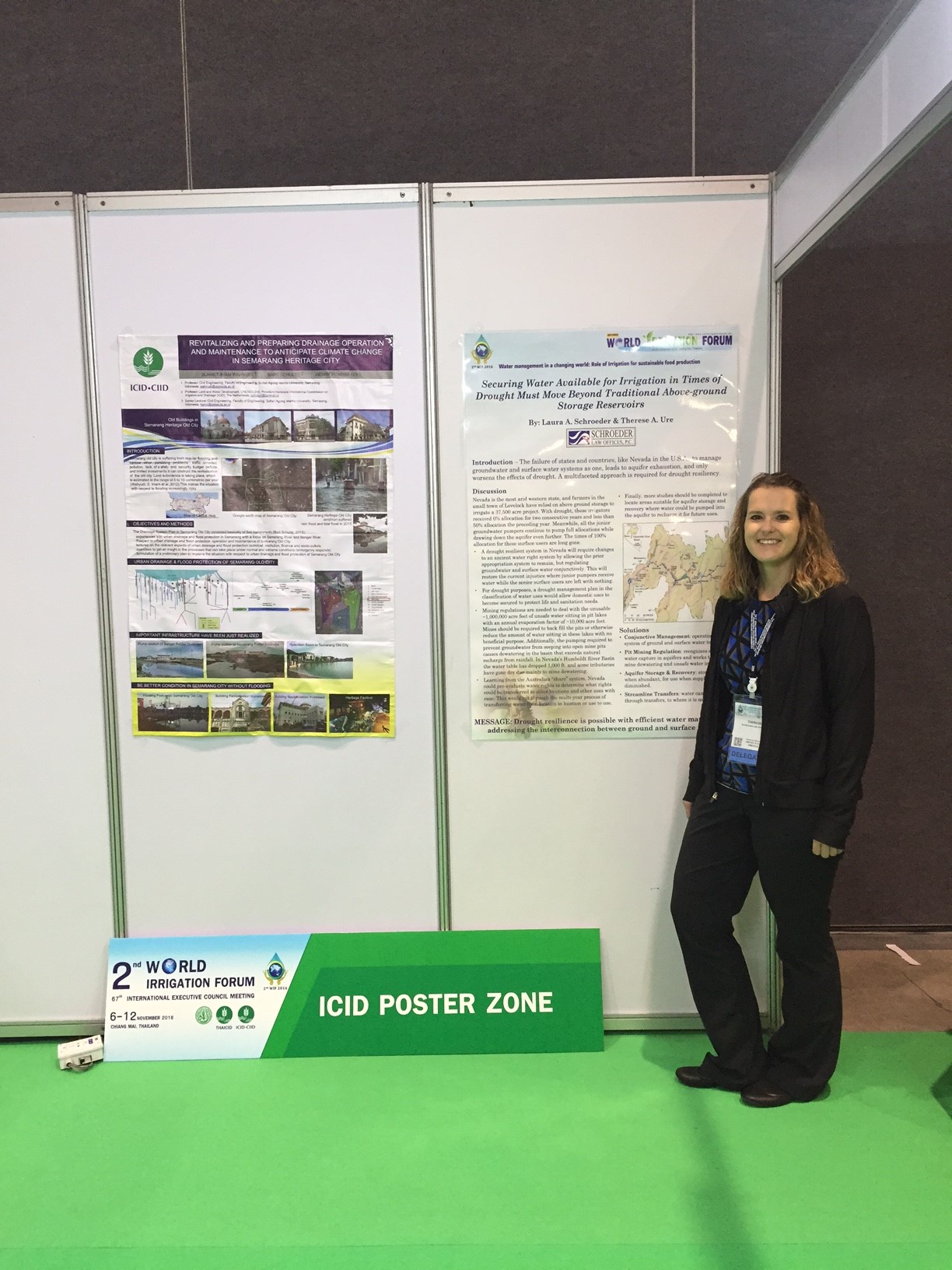
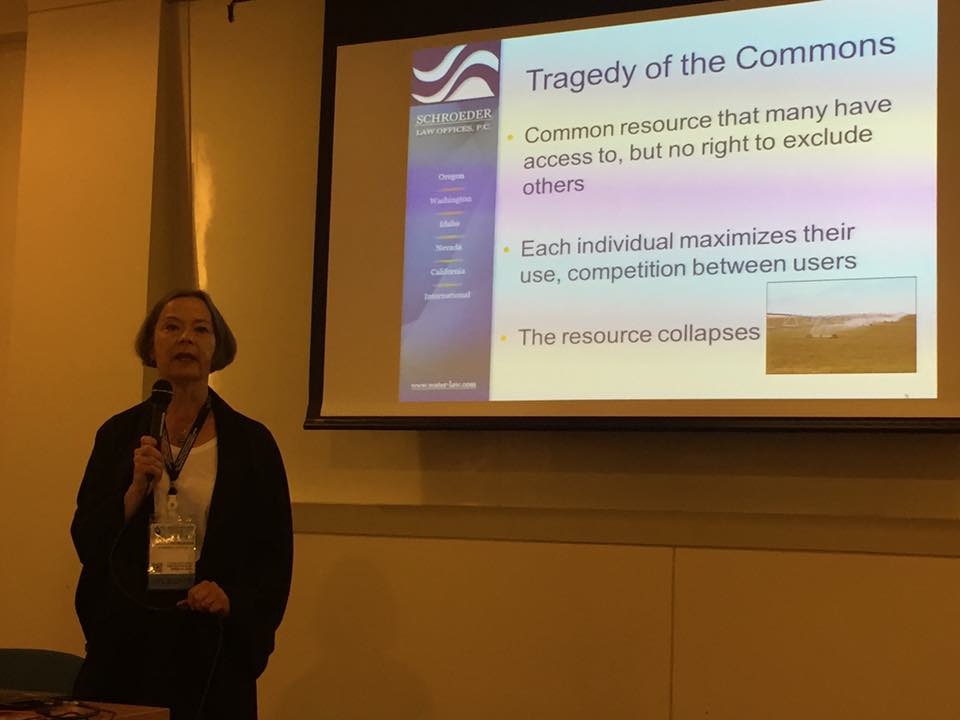
Conjunctive management is continuing to gain more traction; however, there is still much discussion about how states can implement this new management approach. Schroeder Law Offices Shareholder Therese Ure will be adding her voice to the conversation at the International Commission on Irrigation and Drainage’s World Irrigation Forum in Thailand, November 6th – 12th. Attorney Ure’s paper that was accepted for the Forum discusses Nevada’s failure to conjunctively manage its groundwater and surface water systems, including the effects of mine dewatering in such a disjunctive system and suggestions for creating a “dynamic” system of water management.

Make sure to stay tuned to Schroeder Law Offices’ Water Blog for more news about the upcoming World Irrigation Forum!

[1] The Clark Fork Coalition v. Tubbs, 2016 MT 229 (Mont. 2016).

[2] Mont. Code Ann. 85-2-306(3)(a)(iii).

[3] Admin R. M. 36.12.101(13) (1993).


New Request for Extension of Time Form Issued by Nevada

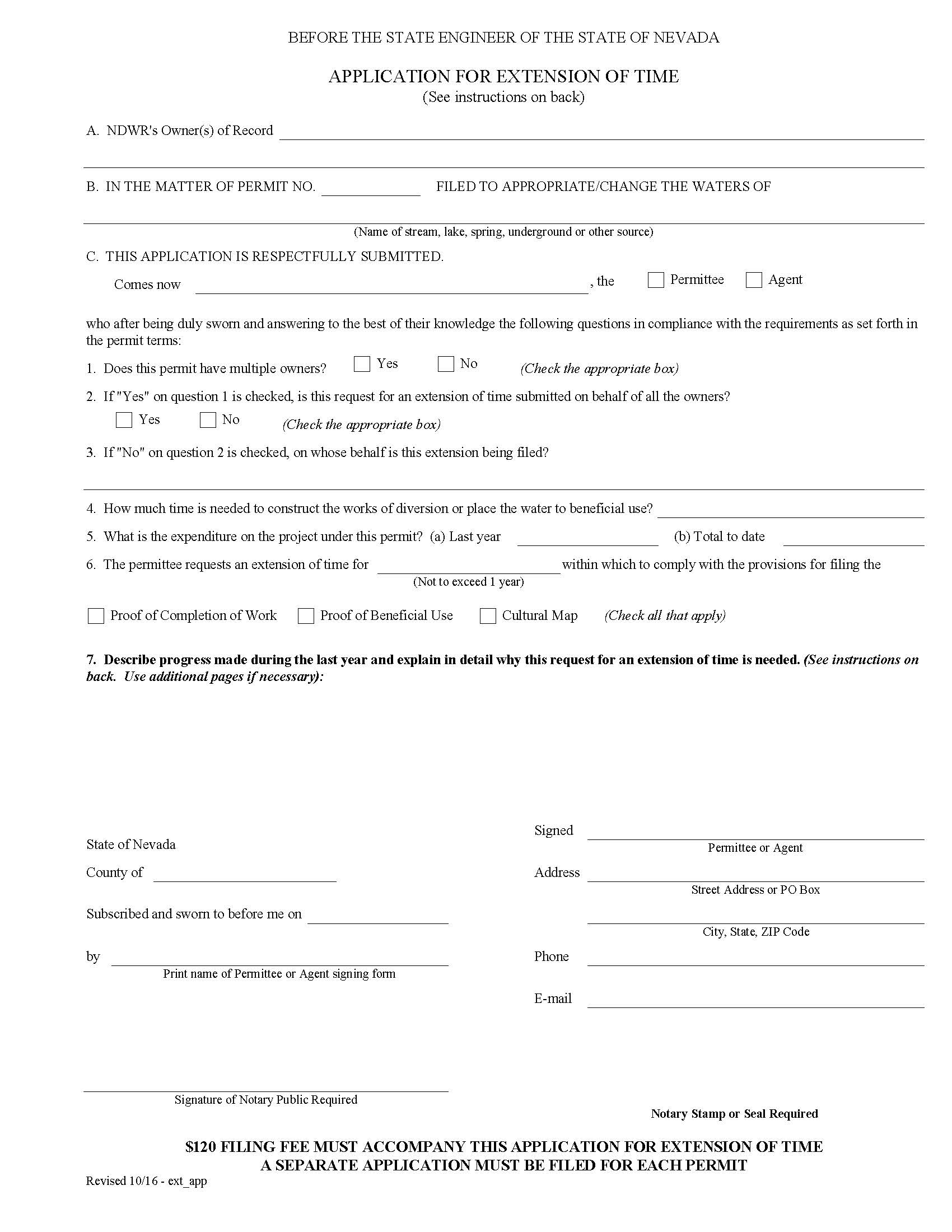
On October 13, 2016, the Nevada Division of Water Resources (“NDWR”) provided notice that a new Application for Extension of Time form must be used when requesting an extension of time for the submission of a Proof of Completion of Work, Proof of Beneficial Use or Cultural Map.

It appears that NDWR is placing more emphasis on the section explaining the reason why the extension is being requested. The instructions sheet accompanying the Extension Request now states that the applicant must highlight progress made during the previous year, and must also “submit any proof and evidence that documents reasonable diligence.” Thus it is important to document what you have been doing on your project to prove up on your rights as well as keep records and documents showing your progress (ie – well driller receipt, pump, pipe, or other infrastructure purchase receipts, photographs with infrastructure installation (include the date, time, and place), and log books of you contact with agency personnel if your project involves working with other state or federal agencies).

Please keep this in mind when preparing an Application for Extension of Time. It appears the NDWR is cracking down and no longer “rubber stamping” approval on application requests.  You don’t want a request for an extension of time denied for lack of proof of due diligence! To view the new Application for Extension of Time form, please visit the NDWR’s website at http://water.nv.gov.


ndwr-ext_app_page_1


Smart Design for Healthier Communities

Like many Portlanders, I enjoy visiting OMSI whenever I get the chance – whether to see my favorites among the permanent exhibits or to be surprised by new attractions. Some years ago, I viewed a temporary installation that showcased a number of low cost, innovative technologies whose aim is to alleviate the burdens of water hauling and purification that often plague remote, disadvantaged communities. In this blog post I would like to highlight two innovations whose simple design belie their powerful impact on providing clean drinking water.

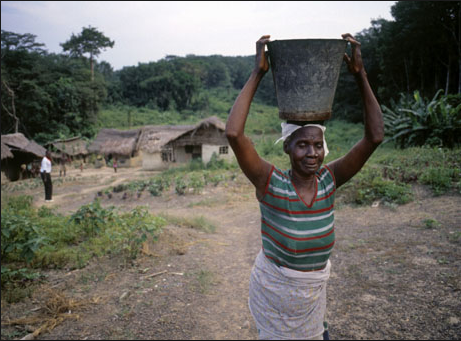
Women and children are often tasked with fetching water in poor rural areas while the men are engaged in gainful employment away from home. It is not unusual for women to balance loads on their heads where the absence of pack animals, back packs or push carts necessitates it. Naturally, this severely limits how much they can carry in a single trip. When children are responsible for fetching water, this can result in their having to miss school, since the journey to and from a water source can sometimes consume the better part of a day.

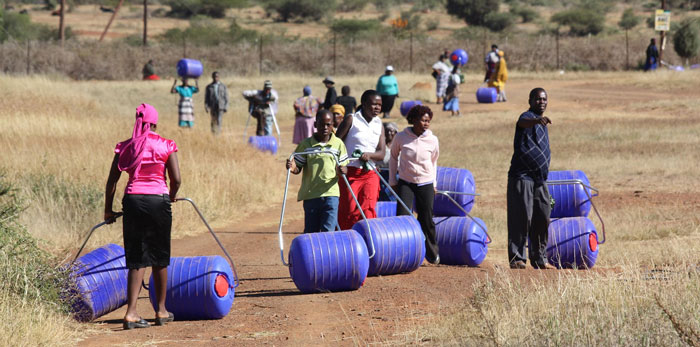
b47711d0737437f36b4e87e04214b3fcThe Hippo Roller was developed by a South African design team. It’s simple, durable design has won a number of international awards since its creation in 1991. The carrier consists of a 24 gallon polyethylene barrel which can be either pushed or dragged by its metal handle across rough terrain.Since effort is applied to spinning the barrel around its metal axis instead of carrying it, the Hippo’s effective weight is reduced to just 10lbs, even when filled to capacity. A single person, even a child, can therefore carry more water in a single trip, while simultaneously reducing the frequency with which water needs to be fetched. Currently, 49,000 Hippo Rollers are in use around the world.

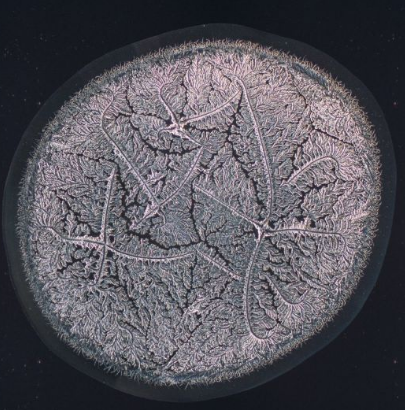
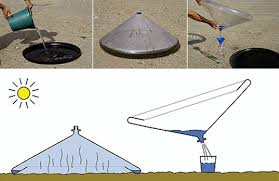
imgresThe Watercone desalination still is another low cost innovation that has garnered plaudits for its remarkable economy of design which essentially relies on sunlight and clear plastic to harvest fresh water. More surprisingly yet perhaps, its striking look has also attracted the attention of the art world : the Watercone has been exhibited at both MoMA NY and the Centre Pompidou in Paris. The still works by pouring salt or brackish water into the round, black dish that forms the bottom of the assembly. A transparent plastic cone is then set inside the rim of the dish and left in the sun for as long as possible. Evaporation distills the water, which condenses on the sides of the cone. When the cone is inverted, the now drinkable water can be drained into a container for use. Depending of the number of hours of sunlight available, the WaterCone can produce anywhere from 0.26-0.45 gallons of fresh water a day.

While one might be tempted to think of design as an optional luxury that adds beauty to one’s surroundings, the Hippo Roller and Watercone demonstrate how engineering acumen and design together can effect powerful change in communities that need it most.


Sage Grouse Project Funding Available in Lander County, Nevada

The Lander County Commission (“LCCD”) is funding a program for sage grouse enhancement projects and is currently looking for land owners that reside in Lander County (not just ranchers) to participate in a sage grouse project. 

LCCD first received funding for the project in 2014 when they were granted $50,000 to begin projects benefitting the sage grouse habitat.  In 2015 and 2016 they were granted another $20,000 per year and are seeking volunteers to participate in projects like riparian enclosures, water development, drift fencing, pinion pine removal, seeding, fire rehabilitation, spring boxes, and troughs to benefit the sage grouse habitat.

Funding Project for Sage Grouse

The deadline to apply for 2016 project completion is October 20th, with the goal of awarding the project in October for it to be completed this year and allow the birds to take advantage of its benefits by spring 2017.  To apply, contact the University of Nevada, Reno’s Lander County Cooperative Extension office at (775) 635-5565, or apply in person at 815 N. Second Street in Battle Mountain, NV. 

While October 20th will remain the deadline for 2016 projects, they will be accepting applications even after the deadline for future project consideration and are open to innovative ideas.


Water Security Risk

concept of water conservation in America - UsaBy 2025, an estimated 1.8 billion people will live in areas plagued by water scarcity.  Two-thirds of the world’s population will be living in water-stressed regions where is there a water security risk. This issue is no longer relegated to the developing world!

We as water lawyers practicing throughout the Western United States are developing new legal strategies to help our small municipal, ranching and farming clients to conserve, maximize efficiency, and change water use patterns to meet these challenges.

To help understand these challenges our lawyers educate, teach and train water users throughout the West and world to use the existing law and traditions to address present and anticipated scarcity challenges. Here is a partial list of presentations we can offer.


Flying Fish Passage!

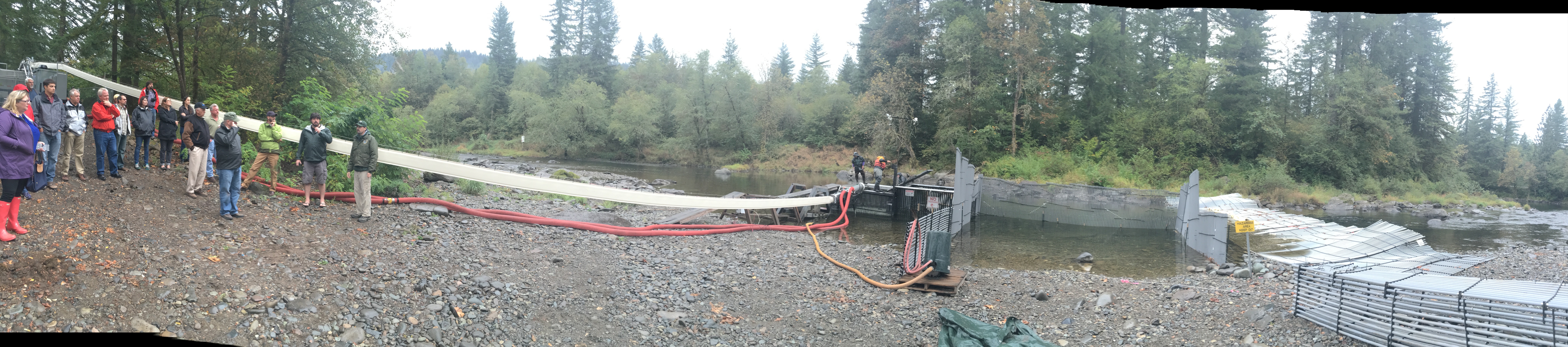
img_3776Last month, attorney Sarah Liljefelt organized a tour of the Whooshh Innovations fish passage structure constructed for the Washington Department of Fish and Wildlife on the Washougal River. Members of the Oregon State Bar Environmental and Natural Resources Section attended, including attorneys in private practice, working for the State of Oregon, and public interest.

Whooshh has patented new technology that propels fish through a rubber tube fish canon from one location to another in mere seconds, be the end result a truck to haul fish, or to the other side of a dam as a new type of fish passage. Studies have shown that stress on the fish is lesser in the Whooshh system than traditional fish passage, and the cost is only a fraction of renovating a dam for traditional fish passage.

Check out videos of the Whooshh system (and fish flying through the system) at Whooshh’s website: http://www.whooshh.com/.

Stay tuned to Schroeder Law Offices’ Water Law Blog for more news!


Find Schroeder Law at the Oregon Ground Water Association’s Fall Convention

Laura Schroeder and Tara Jackson are looking forward to unwinding and learning with the fine members of the Oregon Ground Water Association at their Fall Convention next week, October 14 through October 15 at Eagle Crest Resort in Redmond. Those in attendance will be treated to a presentation by attorney Schroeder on Water Law in Oregon, Transfers, Well Construction.

Hope to see some of you there!

http://www.ogwasite.org/images/pdf/2016_ogwa_fall_convention.pdf

http://www.ogwasite.org/


What to expect when you call a law firm

img_20161006_101744628_hdr

Schroeder Law Offices understands it can be a bit intimidating to contact a law firm when you encounter a problem you cannot solve alone. You are not alone:  Schroeder Law receives multiple initial potential client calls every day, and our goal is to listen, understand, and meet your goal to solve a problem in a cost effective and professional manner.

Unfortunately due to liability, attorneys cannot give legal advice on your initial, first-time call.  While it can be frustrating not to receive an immediate answer to what you may presume is a “quick legal question,” attorneys can only provide answers after conflicts are checked by running them through a system check and the client as well as the general issue are approved to be addressed by the firm.  All information requested of potential clients on the initial call is necessary in order to provide the best and most ethical advice and counsel possible.

When you call Schroeder Law Offices, your call is directed to an experienced member of our staff who will collect basic information and listen to the reason for your call. Below is a short list of the kinds of questions our staff will ask in order to determine what kind of legal assistance you need and if there are any potential conflicts that our office may encounter:

  1. What is your contact info (phone number, email, mailing address)?
  2. Where is the property at issue located? (we prefer lot descriptions)
  3. What is the reason you are seeking legal help? (legal issue or goal for the representation)
  4. What are the names or the people or companies and their attorneys (if you know them) that are involved?
  5. Who is or might be opposed to what you are trying to accomplish?
  6. Are there any immediate deadlines that you are facing?

Once we obtain the relevant information, we will run a conflict of interest check through our digital file system to ensure that any opposing parties are not current or previous clients, confirm that current or previous clients do not own or lease property near the property of concern, there is not a present  deadline that our firm cannot meet, or involve an issue that requires expertise other than what the firm may collectively lend its experience in addressing.

After we confirm there is no conflict, we pass the information to an attorney to review and help with next steps. Based on the next steps that our attorney advises, we will call or email you.  The response may be to offer you an initial attorney call at a flat fee, hourly fee or refer you to another attorney or organization better suited for your needs.  If a flat or hourly fee is involved, and you are interested in proceeding, a proposed fee agreement will be emailed to you.

Upon receipt of the flat or hourly fee agreement, we schedule an initial client conference between you and an attorney to understand your issue more fully, provide preliminary recommendations for moving forward, and legal advice in summary.  Following the initial client conference, you will receive a summary letter of any recommendations or advice provided in the conference.  The summary letter may also include a further contract for legal services with the scope of work tailored to fit your preferred course of action given the recommendations provided.

This process can take anywhere from twenty four hours to one week after conflicts are cleared. However, we understand how important the issues you call our office about are to you and we strive to work as quickly as possible to better serve you, the client!

If you are seeking an experienced Water Law attorney, you can call our office at:

Portland: 503-281-4100

Reno: 775-786-8800


Junior Partner Sarah Liljefelt Accepted to Utah State Bar

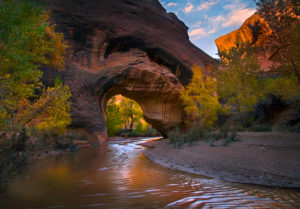
A small stream in the Utah's Escalante wilderness flows through a natural arch lined with Autumn Cottonwoods and complimented by some sunrise color on the sky and cliffs above.
A stream in the Utah’s Escalante wilderness

Junior Partner Sarah Liljefelt was recently admitted to the Utah State Bar, making her eligible to practice law in Utah.  Liljefelt is the first attorney with Schroeder Law Offices barred in the state of Utah! In October, Shareholder Laura Schroeder will join Liljefelt in admittance to Utah State Bar.

Utah water law adheres to the Doctrine of Prior Appropriation, which is similar to other states where Schroeder Law Offices practices. Our firm is always looking for more ways to help those dealing with the nuanced and at times confusing world of water law, so expansion to the state of Utah just made sense.

Attorneys at Schroeder Law Offices are currently admitted to practice law in the states of Oregon, Nevada, Washington, California, Idaho, and Utah. With more bar admissions comes more opportunities to provide help to those in need of counsel.

Congratulations to Sarah Liljefelt and an exciting new chapter for Schroeder Law Offices!


How Safe is Your Drinking Water?

water-hand-web

With the recent discoveries of lead in Portland Public Schools drinking water and the September 15th discovery at the University of Oregon, it becomes a reminder for us all to ensure that our groundwater supply is providing healthy and safe drinking water.

According to the Oregon Health Authority, 90 percent of the population of the state draws all or part of their water supply from groundwater, which amounts to about one billion gallons of groundwater every day. Approximately 23 percent of Oregonians use domestic or private wells as their main source of water. For these well owners it is especially important to watch out for common types of contamination that might affect their water supply. These types of contamination include:

  1. Improper storage or disposal of hazardous substances
  2. Improper use of fertilizers, animal manures, herbicides, insecticides, and pesticides
  3. Chemical spills
  4. Improperly built and/or maintained septic systems
  5. Improperly abandoned wells (these include water wells, groundwater monitoring wells, and wells used in cleaning contaminated groundwater)
  6. Poorly sited or constructed water wells

The Portland Water Bureau is currently working to finish a study looking at the issues of lead in Portland’s drinking water, but major changes won’t be possible until 2022. Private well owners can begin taking steps to protect their groundwater today by being more mindful of how they care for their wells and dispose of hazardous materials.

More information on how to keep your well clean and safe can be found by visiting the National Groundwater Association website.

Sources Consulted:

http://www.opb.org/news/series/lead/portland-corrosive-water-study-epa-timeline/

http://www.ngwa.org/Events-Education/groundwater-day/Pages/default.aspx

http://hosted.ap.org/dynamic/stories/O/OR_UO_LEAD_OROL-?SITE=ORLAG&SECTION=STATE&TEMPLATE=DEFAULT

http://www.ngwa.org/Events-Education/groundwater-day/Pages/default.aspx


Water for Sustainable Growth

World Water Week 2016 is currently underway in Stockholm, Sweden, an annual event hosted by the Stockholm International Water Institute (“SIWI”).  World Water Week is the annual focal point for global water issues, consisting of more than 140 events covering a range of subjects.  The main theme of the 2016 event is “Water for Sustainable Growth,” a follow-up to the previous year’s topics regarding Sustainable Development Goals (“SDGs”) as adopted by the United Nations General Assembly.  The SDGs, as established by the United Nations at World Water Day in March 2016, focus on water and jobs as one of the keys to future water issues: “making a contribution to better the lives of millions of people by maintaining and creating meaningful jobs related to water and wastewater development, service provision, protection and management.”

2017 Water Legislation

Experts attending the event address the value of water and a shared sustainability on a global scale.  Water and climate experts alike call for a Green Water Initiative, using the Water Revolution in Africa as an example.  Large parts of the world are struggling to adapt to a drier reality, but challenges are especially dire in Africa’s drylands.  Developmental options such as rainwater harvesting and other “greenwater” management methods are being suggested to combat the scarcity of water and help to build water resilience for food security and human well-being.

As organizations such as SIWI gather to address and make suggestions regarding water resilience, local concerns echo global concerns.  Water shortages in the State of Nevada raise concern among residents and domestic well owners; more than 20 percent of water basins are over-appropriated – there is more water appropriated on paper than sources to supply it.  Nevada’s Legislative Subcommittee to Study Water, whom held their most recent meeting on August 26, 2016 (details found here), has issued water-conscious statements recommending that local land-use decisions be tied to sustainable water supplies and that water management recognize the connection between surface and groundwater sources.

SIWI’s World Water Week is one of many global events organized with the goal of generating knowledge and power regarding water issues, hosting a number of decision-makers and water professionals in discussions about climate change, energy, sanitation, food, conflict resolution, water management and more.  A few of World Water Week’s highlighted topics (i.e. rainwater harvesting) can be found at http://www.worldwaterweek.org/programme/#since-1991, with resources available in the program archive.


Forecasting 2017 Water Legislation in Nevada

New laws and legislation may affect you, stay tuned for tomorrow’s work session on topics of adaptive management, domestic use, cloud seeding, basin management, and mine dewatering!

2017 Water Legislation

Nevada’s Legislative Commission’s Subcommittee to Study Water will be holding a meeting on Friday morning, August 26, 2016 at 9:00AM at the Legislative Building, Room 4100, at 401 South Carson Street in Carson City.

Items on the agenda include the “Work Session Document” containing recommendations received by the Legislative Commission’s Subcommittee during the 2015-2016 Legislative Interim. This document is designed to assist the subcommittee members in determining which recommendations will be forwarded to the 2017 session, and what other actions the Subcommittee will endorse.

For those who may not be able to attend the meeting in Carson City, it will also be broadcast live over the internet via http://www.leg.state.nv.us, and can be viewed or listened to by clicking the link for “Calendar of Meetings/View” in the top right-hand corner of the page.

Items in the agenda as well as the Work Session Document and other information pertaining to the meeting can be found on the Nevada Legislature website under the “Meetings” tab. For written copies, please contact the Research Division, Legislative Counsel Bureau at (775) 684-6825.

A PDF link to the agenda including the Work Session Document can be found here.


California Water Right Ownership Updates Required

California Water Right Ownership Updates

California Water Right Ownership Updates Required

The State of California wants to know when you sell or transfer water rights. As part of any land use transaction involving water rights, regulations require landowners to provide notice to the Water Resources Control Board (WRCB) when water rights transfer to new owners.

The WRCB will accept any change of ownership unless the change is challenged. If so, the WRCB will wait to update ownership listings until the dispute is settled outside of the agency.

Notification to WRCB should include information like the application number for the water right, name, and address of the new owner. The notice must also be signed by the previous owner. The process is easy. Forms are available at: http://www.waterboards.ca.gov/water_issues/programs/ewrims/ownership/. The forms may be sent electronically, by mail, or fax. Questions regarding the forms may be sent to: changerequest@waterboards.ca.gov.

For other states’ recording procedures and requirements, see: http://www.water-law.com/water-rights-articles/water-right-assignment-and-ownership/.

Make sure to stay tuned to Schroeder Law Offices’ Water Blog for more news that may affect you!

This article was drafted with the assistance of Law Clerk Jakob Wiley, a concurrent student at Oregon State University’s Water Resources Policy and Management graduate program and a law student at the University of Oregon School of Law.


Top Ten Ways to Improve Federal Land Management

With the political race underway, one group has taken a hard look at land management objectives on federal lands. In response, this group prepared a list of the top ten ways to improve federal land management in an open letter to the United States Presidential Candidates. In summary, top ten items include:

  1. Retain federal ownership of most federal lands, but with significant changes.
  2. Enhance the National Park System by converting some of the existing National Monuments to Park status with approval of the applicable State.
  3. Adopt and implement State sage grouse management plans, and withdraw BLM and USFS land use and forest planning as related to sage grouse.
  4. Manage wild horses and burros to achieve “appropriate management levels” (AML) within 4 years with priority timing on sage grouse breeding, late-brood rearing, and winter habitat areas.
  5. Repeal (or amend) the Antiquities Act of 1906, to negate the ability of the President to unilaterally establish National Monuments without the approval of Congress.
  6. Release Wilderness Study Areas (WSAs) within 4 years unless Congress approves to establish the same (in whole or in part) to Wilderness status.
  7. Retain, but amend, the Equal Access to Justice Act, and similar fee-shifting statutes.
  8. Amend the Endangered Species Act to more precisely defining the terms “species,” “endangered species,” and “threatened species.”
  9. Amend the Administrative Procedure Act to provide litigants a meaningful opportunity for participation and for judicial review.
  10. Consolidate administration of the public lands and national forest system lands into one federal land management agency.

Click here for a full copy of this open letter. Open Letter to Presidential Candidates — Top Ten Ways to Improve Federal Land Management in the West 

  • The positions expressed in the letter are those of the individual signatory and do not intend to express the positions of the firm/business or its clients/customers to which the signatory is associated/employed.


New: Harney Valley Groundwater Area of Concern

Groundwater Area

Groundwater Area
Greater Harney County Groundwater Area of Concern

The Oregon Water Resources Commission’s (OWRC’s) rulemaking for the Greater Harney Valley Groundwater Area of Concern (Area of Concern) became effective on April 15, 2016. The new regulations limit pending and new applications for groundwater use in the Malheur Basin. Citing concern over lowering groundwater levels in the region, OWRC passed the new regulations to limit new water development until the Oregon Water Resources Department (OWRD) can adequately study the basin’s groundwater. This regulation is a component of the Malheur Basin Program. The drafts, maps, and rules are available at: http://www.oregon.gov/owrd/Pages/law/Department_Rulemaking.aspx.

Over a year ago, OWRD stopped issuing new ground water permits within the Area of Concern. Until the most recent rulemaking, however, no rules were in place allowing OWRD to halt permit processing and issuance. Usually, OWRC will create by rule Critical Groundwater Areas, Groundwater Limited Areas, and Serious Water Management Problem Areas prior to OWRD ceasing to issue new permits.

OWRC can designate Critical Groundwater Areas for multiple reasons, including declining groundwater levels, substantial interference between wells, overdraft of groundwater, or water quality degradation. OWRD must indicate the boundaries of the area and review the designation at least every 10 years. The designation allows OWRD to, for example, close the area to any further appropriation, limit the total withdrawal from the aquifer, and refuse applications for new groundwater permits.

Groundwater Limited Areas limit future appropriations of water to specified uses, but do not restrict existing consumption of water within the area. Serious Water Management Problem Areas allow OWRD to collect usage data from current water use right holders, but not restrict water consumption. These tools are used to collect information and guide future development of water resources in Oregon.

Rather than designating a critical or limited groundwater area, or a serious water management problem area, OWRD addressed the Harney Valley Groundwater Area of Concern by amending the Malheur Basin Program. Basin programs are used by OWRC to guide water right permitting decisions and coordinate with other state agencies. Within basin plans, OWRC may classify the highest and best uses for particular basins and waterways for future uses, including proscribing types of uses available to future applicants.  Oregon’s basin programs are listed in the Oregon Administrative Rules Chapter 690, beginning at Division 500, and the Malheur Basin Program is located at Division 510, available at: http://arcweb.sos.state.or.us/pages/rules/oars_600/oar_690/690_510.html.

The new regulations for the Greater Harney Valley Groundwater Area of Concern propose to both limit future uses and collect information before OWRD completes a full study of the aquifer, expected to be completed by 2020. The proposed rules received 22 comments, which can be viewed at: http://apps.wrd.state.or.us/apps/misc/vault/vault.aspx?Type=WrdNotice&notice_item_id=6640. In the meantime, 39 groundwater use applications are pending before OWRD, and these applications will not be approved, unless they meet conditions included in the new basin plan regulations. This is in direct opposition to the rule that applications must be processed based on the laws and regulations in effect at the time of filing, but OWRD is taking the position that groundwater is not available for the applications, rather than a regulatory change affected the outcome of the applications (this is not a new approach from OWRD).
The “area of concern” is, in effect, a moratorium on new groundwater development in the region. The new regulations create restrictions on new applications reminiscent of critical groundwater areas, but within the basin program scheme.   The moratorium will put a halt to development in the region, at least while OWRD studies the groundwater in the area. Locals familiar with groundwater in the Malheur Basin are resentful of OWRD’s blanket moratorium when certain areas within the basin do not appear to show the same level of strain as others, and continue to produce great quantities of groundwater.

Make sure to stay tuned to Schroeder Law Offices’ Water Blog for more news that may affect you!

This article was drafted with the assistance of Law Clerk Jakob Wiley, a concurrent student at Oregon State University’s Water Resources Policy and Management graduate program and a law student at the University of Oregon School of Law.


New Sustainable Groundwater Regulations

Groundwater Sustainability Plans

California’s Sustainable Groundwater Management Act Regulations Issued

Groundwater Sustainability Plans

California’s Sustainable Groundwater Management Act (“SGMA”) was passed in 2014. The SGMA requires local agencies to bear the burden of creating, implementing, and enforcing Groundwater Sustainability Plans (“GSP”) in certain groundwater basins to manage the aquifer in a “sustainable” manner. The California Department of Water Resources (“CDWR”) recently issued regulations that help clarify the requirements of the GSPs, but also include some information about how the law will impact local agencies and groundwater users in the State. However, the regulations fail to satisfy some fundamental questions raised by the SGMA.

The new regulations were issued on May 18, 2016 by CDWR provide some insights into how the agency plans to implement the Sustainable Groundwater Management Act. A copy of the regulations may be found at: http://water.ca.gov/groundwater/sgm/pdfs/Proposed_GSP_Regs_2016_05_10.pdf. Under the regulations, the agency set out the requirements for plan contents, including administrative information, a description of the basin, sustainable management criteria, a description of the monitoring network, and projects associated with the plans.

The administrative information section must include general information about the region, description of the local agency developing the plan, and the agency decision-making process with public engagement.

The basin setting section must thoroughly describe the basin’s hydro-geologic conditions and must create a “water budget” that describes all the surface and groundwater movement into and out of the basin. Under this section, the local agency must estimate the “sustainable yield” of the basin.

Sustainable Management Criteria have also been outlined by the regulations. These criteria require local agencies to set a sustainability goal that eliminates undesirable results of groundwater use within 20 years of the statutory deadline. CDWR will evaluate sustainability goals based on the achievement of minimum thresholds established by the local agency. The minimum thresholds expand on the statutory language for “undesirable results.” For example, a significant and unreasonable reduction in groundwater storage levels will be evaluated based on the locally defined “undesirable results,” supported by the “sustainable yield” of the basin. The local agency must also include a measuring system and “measurable objectives” that are revisited every five years.
The regulation also outlines the procedure that CDWR will use to evaluate plans, timelines for approval and reporting, and how local agencies can amend their plans. It also sets out the procedure for interagency agreements and addresses adjudications and alternatives to GSPs.

The real impact will come from the local agencies’ interpretation of the word “sustainable.” The new regulations use the term throughout, defining the quantity of water in the water budget available and defining allowable groundwater depletions. Traditionally, sustainable yield is considered the amount of water that can be withdrawn in balance with recharge. At first glance, the definition makes sense. The meaning, however, simplifies a more complex concept. When water is pumped from an aquifer, three results can occur: a reduction in stored water stored in the aquifer, capture of surface water (like rain or seepage from a river), or a reduction in discharge (like a spring or river baseflow), or any of these effects in combination depending on the specific aquifer. Ponce, Victor M., Sustainable Yield of Groundwater, (available at: http://ponce.sdsu.edu/groundwater_sustainable_yield.html). It remains to be seen how “unreasonable” and how “significant” the undesirable effects have to be in order to become unsustainable.

Make sure to stay tuned to Schroeder Law Offices’ Water Blog for more news that may affect you!

This article was drafted with the assistance of Law Clerk Jakob Wiley, a concurrent student at Oregon State University’s Water Resources Policy and Management graduate program and a law student at the University of Oregon School of Law.


Update: Klamath Basin Agreements in 2016

Klamath Basin Agreements

On April 6, 2016, amendments to the Klamath Hydroelectric Settlement Agreement (KHSA) and the new Klamath Power and Facilities Agreement (KPFA) were signed at a ceremony at the mouth of the Klamath River on the Yurok Indian Reservation. These changes come in the wake of the Congress’s decision not to pass legislation for the Klamath Basin Restoration Agreement (KBRA). Negotiations between the signatories of the new agreements in the Klamath Basin were kept secret, the results of their discussions can be seen in these new agreements, available at: https://www.oregon.gov/owrd/Pages/adj/index.aspx.

The amended KHSA’s purpose is to establish a process for removal of Iron Gate, Copco 1, Copco 2 and J.C. Boyle dams under the Federal Energy Regulatory Commissions relicensing procedures. The decision to remove the dams was made based on a cost-benefit analysis that was not released to the public. The amended agreement will also shield PacificCorp and its customers from liability for damages associated with dam removal. The amended agreement transfers the ownership of the dams to the Klamath River Renewal Corporation. The new corporation will conduct the dam removal, while PacificCorp will operate the dams until their decommissioning. The dams are expected to be removed in 2020. The U.S. Department of the Interior, the U.S. Department of Commerce, California and Oregon States, and PacificCorp were parties to the agreement.

The KPFA is an agreement designed to mitigate economic and regulatory issues facing users of water and land in the Klamath Basin. Oregon and California States, the Klamath Water Users Association, public interest groups (including American Rivers, Trout Unlimited, and Sustainable Northwest), the U.S. Department of the Interior, and the National Marine Fisheries Service were parties to the agreement. The KPFA stipulates that the signing parties must meet and confer when there is an unforeseen circumstance related to the fishery restoration and regulatory impacts on the local economy. It also obligates the U.S. Bureau of Reclamation (“BOR”), upon transfer of the operation of Link River and Keno Dams, to operate the dams without adding any associated costs to water users for the maintenance of infrastructure. The BOR will operate those dams consistent with existing contracts for irrigation and flood control, and attempt to prevent salmon from entering irrigation canals and ditches. Funding for projects preventing salmon entry into irrigation infrastructure will come from a variety of sources, including irrigation districts, federal, state, and private parties. The agreement also requires the signing parties to support and defend the KHSA, refrain from making statements in opposition to the KHSA, and support the KHSA in administrative and judicial forums. Notably, representatives of the local landowners that will be affected were not included in negotiations, and are not signatories to the agreement.

In short, after many years of receiving a clear message from Congress that it was not going to fund the KBRA’s dam removal plan, the proponents are moving forward without Congress’s approval, or the approval of the local residents that will be most affected. Rather than retrofit the dams to allow fish passage and other updates, the negotiating parties are removing the dams. Along with the dams, the negotiating parties are doing away with inexpensive power, jobs, and water storage for increased reliability within the basin, in a proverbial “flushing the baby with the bathwater” situation. It remains to be seen how severe the impacts from dam removal will be on top of the other stresses that the Klamath Basin has suffered since the administrative phase of the Klamath Basin Adjudication was completed, and since the region has suffered from severe drought for several years.

Make sure to stay tuned to Schroeder Law Offices’ Water Blog for more news that may affect you!

This article was drafted with the assistance of Law Clerk Jakob Wiley, a concurrent student at Oregon State University’s Water Resources Policy and Management graduate program and a law student at the University of Oregon School of Law.


New Oregon Water Permit Condition to Begin Construction

The Oregon Water Code provides that construction of a water system must be completed within certain time limits from issuance of water use permits (5 years for non-municipal water use permits, and 20 years for municipal permits). ORS 537.230 (“…the holder of a water right permit shall prosecute the construction of any proposed irrigation or other work with reasonable diligence and complete the construction within a reasonable time, as fixed in the permit…”); ORS 537.630. The same provisions allow the Oregon Water Resources Department (“the Department”) to grant extensions of time for completion of construction.

The Oregon Water Code also provides that water use permits may be cancelled when a permittee fails to begin construction within permit deadlines. ORS 537.410(1) (“Whenever the owner of a permit to appropriate the public waters of Oregon fails to commence actual construction work within the time required by law, or having commenced construction work as required by law, fails or neglects to prosecute the construction work with reasonable diligence, or fails to complete the construction work within the time required by law, or as fixed in the permit, or within such further time as may be allowed under ORS 537.230, or having completed construction work, fails or neglects to apply the water to beneficial use within the time fixed in the permit, the Water Resources Commission may cancel the permit on the records in the Water Resources Department as provided in ORS 537.410 to 537.450.”)

In determining whether to grant an extension of time, the Department considers: 1) the cost of the appropriation and application of water to a beneficial purpose, 2) the good faith of the appropriator, 3) the market for water or power to be supplied, 4) the present demand for the water or power to be supplied, and 5) the income or use that may be required to provide fair and reasonable returns upon the investment. ORS 537.230(3); ORS 539.010(5); see also OAR Chapter 690 Division 315. The Department’s general practice has been to liberally grant extensions of time if the permittee is able to show a financial investment to begin construction and/or water use under the permit and a reasonable explanation for the delay. Permit extension of time applications are available on the Department’s website at: http://www.oregon.gov/owrd/PUBS/docs/forms/App_Ext_WR_perm.docx.

Recently, the Department has added the following condition to new permits: “The deadline to begin construction may not be extended.” Although the new permit condition does not mark a departure from the Oregon Water Code’s provisions, it does mark increased seriousness from the Department about what is necessary to obtain an extension of time to develop a new water use right. Permittees should be sensitive to the change in climate regarding beginning construction and applying water to beneficial use.

Now, more than ever, it will be important to begin construction within the 5-year deadline in order to avoid permit cancellation. “Actual construction” means “physical work performed towards completion of the water system, which demonstrates both the present good faith of the water right permit holder and the water right permit holder’s intention to complete the project with reasonable diligence.” OAR 690-315-0020(3)(d)(A). This does not include planning, securing financing, entering into contracts, surveying, or purchasing (but not installing) equipment. OAR 690-315-0020(3)(d)(B).

Make sure to stay tuned to Schroeder Law Offices’ Water Blog for more news that may affect you!


U.S. Supreme Court Rules CWA Jurisdiction Reviewable in Federal Court

The Clean Water Act is an issue of gathering significance with the Environmental Protection Agency and adoption of a newly defined “waters of the United States” (“WOTUS”), wherein civil and criminal penalties can attach if pollutant is discharged into jurisdictional waters. Thus, whether water is defined as “jurisdictional” becomes an important significance. On May 31, 2016, the U.S. Supreme Court issued a ruling in United States Army Corps of Engineers v. Hawkes Co., Inc., et al., regarding Clean Water Act (“CWA”) application and the regulatory jurisdiction of the United States over water resources.

In the lawsuit, three peat mining companies sought a permit from the Army Corps of Engineers to discharge certain material into a wetland. The companies sought a “jurisdictional determination” from the Army Corps of Engineers stating that the property was jurisdictional under the Clean Water Act. Disagreeing with the determination, the companies sought review of the determination under the Administrative Procedure Act, appealing the determination to Federal District Court. The Federal District Court dismissed the matter, holding that a jurisdictional determination is not a “final agency action” allowing the right of an appeal to the Court.

Upon review by the U.S. Supreme Court, the Court overturned the lower court, and found that a jurisdictional determination is in fact a final agency action and judicially reviewable. While this ruling does not affect the current stay of the newly adopted rule governing the definition of WOTUS, it does shed light on procedure and available remedies should water be found to be jurisdictional, where a permit application disagrees.

This decision is overall good news for those seeking to comply under the Clean Water Act, and where the EPA and Corps may overstep their bounds in finding certain water to be jurisdictional. Any determination of jurisdiction is reviewable in Federal Court, where an individual can properly assert and provide evidence that certain water is in fact not jurisdictional. In any event, this decision sparks the beginning of likely a long line of cases pending around the country relating to the CWA’s jurisdictional reach.

For the full text of the case, please visit http://www.supremecourt.gov/opinions/15pdf/15-290_6k37.pdf.