Melting Glacier National Park

Last month we were fortunate to take our sons to visit Glacier National Park in Montana. It was a great opportunity, especially in light of the fact that Glacier National Park’s glaciers are melting and will be gone in our lifetime! Last month, the United States Geological Survey (“USGS”) released data showing that the park’s 37 glaciers have melted an average of 40% since 1966. USGS’s research ecologist, Daniel Fagre warns that at this rate, they will be gone within our lifetime and notes that in order for the glaciers to survive, the area must experience significant cooling.

If the park loses its glaciers, significant changes will impact not only the environment, but also wildlife. The stream water volume, change in water temperature and timing of run-off will have direct impacts on the park’s aquatic wildlife. Glacier National Park’s glaciers are estimated to be 7,000 years old, however, it appears the same changes to our environment that threaten our water sources in times of drought are also taking away our precious National Monuments. Plan a visit to see these glaciers before they are gone!


Oregon Water Resources Department Proposes Revisions to Municipal Water Management and Conservation Planning Program

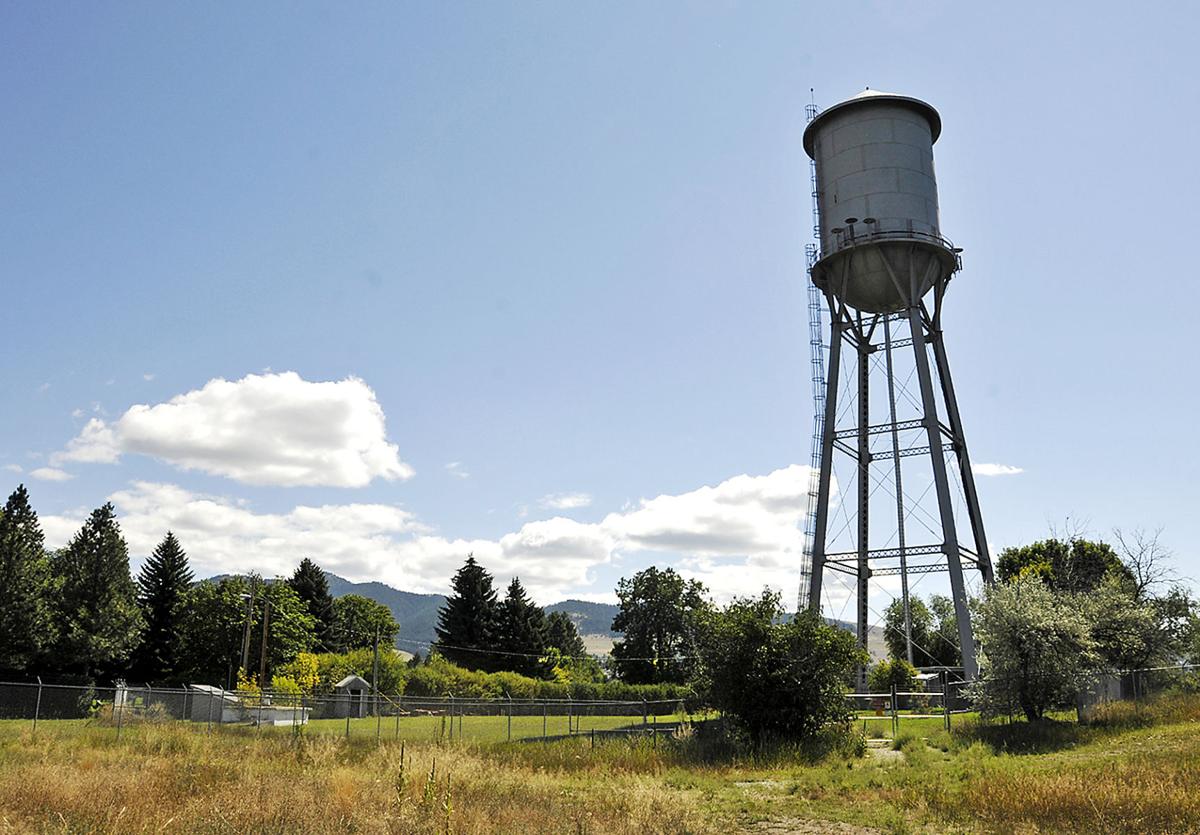
water tower tb.jpg


The Oregon Water Resources Department’s (“OWRD”) requires water suppliers to submit Water Management and Conservation Plans (“WMCP”) as part of its integrated resource management strategy. WMCPs are required when a municipal water supplier requests new water use permits or permit extensions.[1] Municipal water suppliers serving more than 1,000 people must prepare WMCPs to describe the municipality’s sources of water, to determine the need for increased diversions of water under their permits as their demands grow, and to explain how the water supplier will manage their water supplies to meet future needs.

Currently, WMCPs must include: a municipal water supplier description, a conservation element, a municipal water curtailment element, and a municipal water supply element, among other items.[2] A water supplier has two years to submit a WMCP after a new water use permit has been issued and three years after issuance of a final order approving a permit extension of time.[3]

A WMCP must include a schedule of water conservation measures with five year benchmarks for implementation of those activities, which must then be reported to OWRD.[4] The conservation element includes: conducting an annual water audit for the system, implementing a program to install meters on all un-metered water service connections, a meter testing and maintenance program, a rate program based on quantity of water metered, a systematic program to detect leaks, a public education program to encourage efficient water use, and if the water supplier proposes to expand or initiate diversion of water under an extended permit, a description of such activities.[5]

If a water supplier submits a permit extension request for the permit to be issued for quasi-municipal use and the service population is less than 1,000 (“Small Municipal Water Suppliers” or “SMWS”) or the supplier demonstrates they will apply water to full beneficial use under the permit in less than five years, then a WMCP may not be required, though OWRD has discretion to require a WMCP. As one might imagine, the requirements to submit a WMCP have become burdensome for SMWS, imposing financial and staffing strains. In addition, the criteria of the WMCPs are not always applicable to the SMWS. This burden was acknowledged by OWRD at its May 11, 2017 meeting before the Oregon Water Resources Commission meeting at which OWRD proposed adding new rules to Oregon Administrative Rules, Chapter 690, Division 86 to allow SMWS to submit a WMCP tailored to small municipalities.

To decrease the burden to SMWS, OWRD announced it will be proposing a new rule allowing SMWS to submit a WMCP that will require less detail and analysis than the current WMCPs. OWRD noted that SMWS will still be required to demonstrate water is being used responsibly, that emergency plans are in place, and that the supplier understands water rights and diversion amounts. OWRD will convene a Rules Advisory Committee this fall or summer, at which time further proposed changes to the WMCPs and the impact of those changes on SMWS will become clearer.

[1] Or. Admin. R. 690-315-0090.

[2] Or. Admin. R. 690-086-0125.

[3] Oregon Water Resources Dept., Water Management and Conservation Plans: A Guidebook for Oregon Municipal Water Suppliers, 2d. ed. (Mar. 2015) available at http://www.oregon.gov/owrd/docs/wmcp_guidebook.pdf.

[4] Or. Admin. R. 690-086-0130.

[5] Or. Admin. R. 690-086-0160.


Schroeder Law offices Congratulates Lindsay Thane on Passing the Oregon Bar!

Schroeder Law Office Professional Portraits, Portland Oregon Photographer –
http://www.RobProPhoto.com Photography

Schroeder Law Offices is excited to announce that J.D. Paralegal Lindsay Thane passed the Oregon State Bar, and will be licensed to practice law in Oregon upon her swearing in ceremony scheduled for May 18th, moving into the position of Associate Attorney.

Lindsay joined Schroeder Law Offices in their Portland, Oregon office in 2016 after graduating from the University of Montana School of Law. Lindsay is an avid runner and enjoys competing in local road races. She loves being outdoors hiking with friends and family. Lindsay has also spent many summers water skiing on Flathead Lake near her home town in Montana.


The Importance of Due Diligence!

Due Diligence

The issue of updating ownership of water rights of use continues to rear its ugly head in the context of water right forfeiture proceedings. I can’t stress enough how important it is in Nevada to update ownership records with the Nevada Division of Water Resources. Currently, NRS 533.384 requires buyer to file ownership update information with the State Engineer.

Thus, when buying property, it is not enough to record your deed with the county, you must also update the records for water rights of use with the Nevada Division of Water Resources by filing a report of conveyance and abstract of title (these are specific forms with instructions available on the NDWR website). If there is a title issue that might take you some time or assistance to sort out, then file a Request for Correspondence (another form) with NDWR so you at least receive some kind of notice as to matters relating to your water rights. Don’t miss these important notices putting your water rights of use in jeopardy by failing to update ownership records!

Some title issues that come up in Reports of Conveyance and Abstracts of Title include deeds that inadvertently do not transfer all the property, deeds that have different names or entities thus causing additional supporting research to show they are one-in-the-same, having to research title back to the original water right holder, and having to sift through probate documents to show a transfer in ownership, to name a few. Regardless of the issue that needs resolving, now is the time to diligently check your rights of use and ensure you are in compliance with NRS 533.384.


NWRA Free Water Conservation Ideas Sharing Forum

Are you interested in learning more about successful conservation tactics? The National Water Resources Association (“NWRA”) is hosting a free seminar! The seminar will take place on August 7, 2017 at the Genoveva Community Chavez Center in Santa Fe New Mexico, following the NWRA Western Water Seminar. The Water Conservation Ideas Sharing Forum will host various agencies throughout the West, who will share their successes and setbacks in implementing their various water conservation programs. And the best part is, the Water Conservation Ideas seminar is free regardless of attendance to the Western Water Seminar! For more information on attending this seminar to gain valuable knowledge of conservation ideas, please see http://www.nwra.org/2017-municipal-caucus-meeting.html.


Schroeder Law Offices, Reno has a New Location

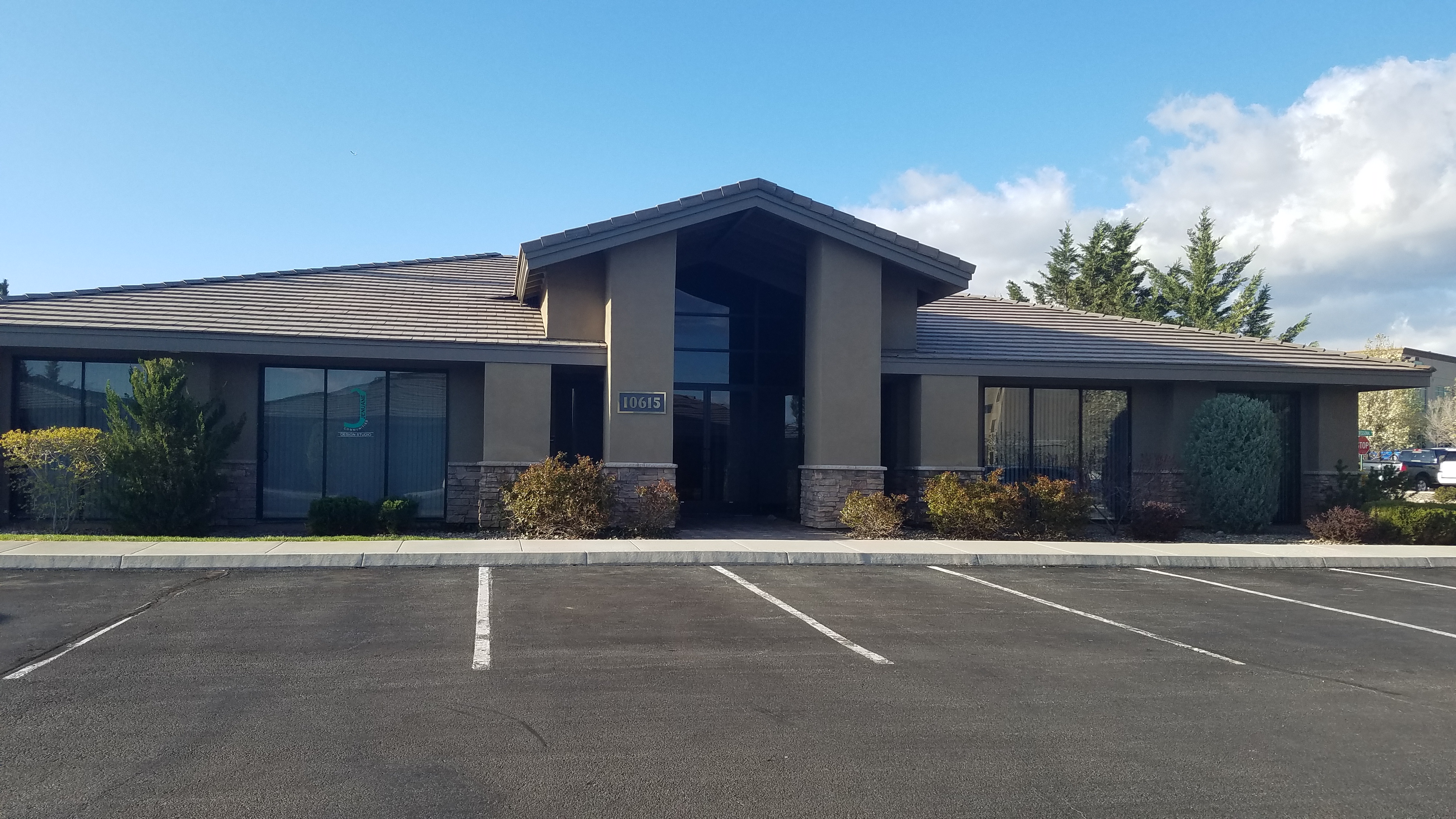
We are excited to announce our new office building for the Schroeder Law Offices, P.C. Reno Office! We were previously located off Marsh in the Midtown Reno area, but have relocated to a bigger space in South Reno that better fits our needs to serve our clients. Please take note of our new physical and mailing address listed below:

New Reno Office

Schroeder Law Offices, P.C.
10615 Double R Blvd.
Reno, NV 89521

We couldn’t be more pleased with our new space and are looking forward to serving clients from this new location. We are currently adjusting to our new home but will be hosting an open house event this coming summer to get to know our community better and share the space with our clients. Be on the lookout for an announcement with open house details!


Oregon Legislature Considers Bill to Fund Meters Measuring Groundwater Use


The Oregon Task Force on Drought Emergency Response met throughout 2016 to propose statewide recommendations to address current and future water shortages throughout the State. One of the task force’s recommendations has been embodied in House Bill 3051,[1] which has garnered support from Democrats and Republicans alike.

H.B. 3051 will help pay for the installation, repair, and replacement of measuring devices on authorized diversions and points of appropriation to measure groundwater use. The bill authorizes the use of the Water Measurement Cost Share Program Revolving Fund, which has been available since 2000 to incentivize surface water users to measure their water use, to now fund the installation or replacement of groundwater measuring devices.

This is a voluntary system that allows the Oregon Water Resources Department (“OWRD”) to work with landowners to install measuring devices at their points of appropriation or points of diversion. Additionally, the fund can pay up to seventy-five percent of the cost of installing the measuring device.

The widespread support for this bill stems from a desire to protect priority of water rights through improving the amount of information about groundwater use available to OWRD. OWRD uses this type of groundwater use data to better understand the availability of water in a basin, to determine how much water is available for withdrawal, and to better manage any interference between junior and senior groundwater users.

H.B. 3051 passed out of the Oregon House of Representatives on April 3, 2017 and has been referred to the Senate Environment and Natural Resources Committee.

[1] https://olis.leg.state.or.us/liz/2017R1/Measures/Overview/HB3051 


President Trump Directs Executive Departments and Agencies to Review WOTUS with an Eye to Rescind or Revise it

Co-Authored By: Attorney Therese Ure & Lisa Mae Gage


In August 2015 the United State Environmental Protection Agency (“EPA”) and the U.S. Army Corps of Engineers (“Corps”) put their stamp of approval on the Waters of the United States (“WOTUS”) final rule. The WOTUS rule significantly expanded the definition of “waters of the United States” under the Clean Water Act, granting federal regulatory control over virtually all waters in the United States. Many groups opposed this rule, arguing that it expands federal jurisdiction, resulting in the imposition of burdensome requirements on agricultural producers.

On February 28, 2017, President Donald Trump signed an executive order directing the Administrator of the EPA and the Assistant Secretary of the Army for Civil Works to review the WOTUS rule to ensure the nation’s navigable waters are protected, as well as to promote economic growth and show due regard for the roles of Congress and the States. See https://www.whitehouse.gov/the-press-office/2017/02/28/presidential-executive-order-restoring-rule-law-federalism-and-economic.

President Trump also directed the administrators, along with the heads of all executive departments and agencies, to consider interpreting the term “navigable waters” as it is defined in 33 U.S.C. 1362(7), and consistent with the opinion of late Justice Antonin Scalia in Rapanos v. United States, 547 U.S. 715 (2006). Considering these interpretations, one might construe “navigable waters” as waters in the United States, including the territorial seas, that are “navigable in fact” or readily able of being so.

This executive order was preceded by a House Resolution . See https://www.congress.gov/bill/115th-congress/house-resolution/152/text. The Resolution states WOTUS should be withdrawn or vacated as the EPA and Corps did not follow proper procedural steps and claimed expansive jurisdiction that infringes upon State authority.

Several agricultural groups are strongly supporting the House Resolution and the Executive Order. As water is a valuable resource to all, regulation upon it must be closely scrutinized and controlled. According to the agricultural community, President Trump’s executive order and the House Resolution regarding WOTUS is a welcomed relief.


Measurement and Reporting Requirements for Water Use

As the 2017 irrigation season approaches, Oregon water permit and certificate holders may want to review the terms of those permitted and certificated uses for measurement and reporting requirements.

Many groundwater permits and certificates require annual reporting of various water measurements, most notably measurements for static water levels of wells, flow meter readings or perhaps critical ground water area measurements depending on where these uses are located.

Measurements are typically due annually but sometimes are required to be tracked monthly and submitted to the Oregon Water Resources Department. These recordings allow the Department to track changes in water levels and depending on varying levels between the years may allow the Department to require users to discontinue or reduce the rate of their water use.

Our office encourages all water users to closely review the terms of their water permits and certificates in order to understand and be responsible for the requirements and meet the terms of these rights of use. We also provide services to clients including review of water permits, certificates and related documents, refer to qualified individuals to take these recording measurements and courtesy reminder letters to our clients.

For more information on water use reporting please visit the Oregon Water Resources Departments website. For more water news and information, keep reading Schroeder Law Offices blog!


More Proposed Water Law Changes in Nevada Legislation

Water Law Changes
by Lisa Kane and Therese Ure

The 2017 Nevada Legislative Session is currently in motion; the 79th legislative session began on February 6th and will continue through June of 2017. Meetings are being held daily by the senate and assembly committees as they review proposed changes to Nevada legislation. There are several already-proposed bills on water law that may affect water rights users in the state (click here for a more comprehensive list), however, a couple of new bills have been introduced in the past week that seek to address different water-related matters.

Assembly Bill 209 (AB 209), proposed by Assemblyman James Oscarson of Nye County, is drafted to address issues with extensions on groundwater rights and forfeiture prevention. The bill seeks to revise provisions concerning water law in the State of Nevada that would require the State Engineer to, under certain circumstances, extend the time necessary to work a forfeiture of certain water rights. The full text for this proposed bill can be found here.

Senate Bill 134 (SB 134), proposed by Senator Pete Goicoechea of Eureka County and Senator Aaron Ford of Clark County, was also newly introduced in the past week and focuses on providing legislative direction to the State Engineer in regards to water applicants and conflicts with existing water rights. Specifically, SB 134 would authorize the State Engineer to determine if such a conflict exists and if so, to impose a monitoring, management and mitigation plan upon applicants whose requested use conflicts with existing rights. The bill also requires that conflicts be eliminated in order for the water use application to be permitted. The full text for this proposed bill can be found here. While the current water law already requires the State Engineer to evaluate and not approve applications that conflict with existing rights, this legislation add the ability to impose monitoring, management, and mitigation plans (aka “3M Plans”) as a way to offset conflicts.

The Nevada State Legislature’s website provides session information as well as bill draft requests, fact sheets, bill text and further information. The Legislature’s calendar also provides links to daily meetings and allows the public to view live sessions across the state. To keep apprised of bill progress or view active work session agendas visit the legislature website at https://www.leg.state.nv.us/App/Calendar/A/.


The Danger of the Failing Water Reservoirs

Oroville Dam is the tallest dam in the country. It is located in the foothills of the Sierra Nevadas, east of Sacramento, California. All of the recent storms and heavy rains have caused the water in the dam to rise rapidly. Last week, a giant hole appeared in the dam’s main spillway. This caused officials to begin releasing water over the emergency spillway, an occurrence that has never happened since the dam was completed in 1968.

Water Law Changes

Although the dam itself remains intact, the erosion damage to the spillway increases the risk of failure of the structure. If the dam structure fails, an uncontrollable amount of floodwaters will be released, threatening communities below! At least 188,000 people living downstream were ordered to evacuate in the face of this concern. The dam operators have since been able to start slowing the releases from the dam and residents have since be able to return to their homes. However, the National Weather Service has predicted another atmospheric river to strike the area in the next few days, causing ongoing concerns for the fragile dam and downstream residents.

Further, Lake Oroville is the largest reservoir in the California State Water Project. A network of canals and pumping stations carry water from Northern California to the Central Valley, and even as far as Southern California. If that water is lost, communities state wide will feel its effects.

Repairing the current main spillway could cost between $100 million and $200 million, but that amount continues to rise with the additional erosion damage to the emergency spillway. Along with the failure of the dam near Montello Nevada in the north-eastern part of the state on February 8, 2017, this is just another reminder of how precious and necessary our water resources really are.


Proposed Water Law Changes in 2017

Water Law Changes

The upcoming 2017 Nevada Legislative Session includes proposed water law changes that could affect water rights users across the state. The 79th legislative session, which starts on February 6, 2017 and ends on June 5, 2017, contains a number of proposed water law changes. It appears there will be four senate bills submitted by the Nevada State Engineer and Nevada Division of Water Resources during the session, as well as five bills from the Nevada Legislative Committee to Study water, and five bills from individual legislators and committees.

The four senate bills to be introduced to the 2017 legislative session that include potential changes to water law in Nevada are as follows: Senate Bill 47 (SB47) proposes various changes to the appropriation of water; Senate Bill 51 (SB51) proposes various changes to the adjudication of vested water rights; and Senate Bills 73 and 74 (SB73 and SB74) propose the revision of various provisions relating to water rights and use in the State of Nevada. Any pre-filed bills, which include the senate bills listed above, are available for public viewing on the Nevada Legislature’s website at https://www.leg.state.nv.us/Session/79th2017/Reports/Prefiled.cfm. By clicking on the link for the proposed bill, users can view the full bill text as introduced to the Senate as well as the bill’s history of hearings or votes as the session moves along. These bills are also referred to the Senate Natural Resources Committee for review.

Water Law Changes

While proposed bills could bring changes to water law at a statewide level in Nevada, county officials and other local groups are also working to develop local water management plans. The Nevada Farm Bureau, for example, has a collected a group of interested volunteers to participate in a Water Discussion group for water management plans specific to volunteers’ areas around the state. The Bureau also continues to encourage interested parties to contact them for more information regarding such discussion. According to the Pahrump Valley Times, officials in Nye County have conducted studies on a number of wells in the Pahrump Valley that have the potential to go dry. Further, studies are ongoing in the Humboldt River Basin and being conducted by USGS and DRI. It appears scientists are looking to understand the groundwater system better.

Studies such as those being conducted in Nye County will likely continue across the state in preparation for recommendations on approval or denial of the proposed water law changes in Nevada’s 79th Legislative Session in 2017. Counties and hydrographic basins may have different needs based on appropriation and water sources available. The interested public can keep current with session information and the drafting and approval of bills as the session persists at the legislature’s website: https://www.leg.state.nv.us/Session/. County and city papers also continue to publish information regarding more local sessions.


The Nevada Farm Bureau 2017 Policy Supporting Groundwater Management Plans

Water Year 2016

The Nevada Farm Bureau has adopted new and revised policies, which are available in their 2017 Policy Book. The policy positions were approved by farmer/rancher voting delegates at the general session of the 2016 Nevada Farm Bureau Annual Meeting. One important new policy adopted by the Nevada Farm Bureau relates to supporting groundwater management plans for critical management areas.


The Nevada Farm Bureau recognized that under state law, local citizens have an opportunity to propose groundwater management plans in order to bring allocated water rights of use back into balance with actual available water resources. The State Engineer has identified one water basin, Diamond Valley, as a Critical Management Area. This basin is open to Groundwater Management Plans, that can be proposed by local citizens. In the new policy, the Nevada Farm Bureau provides an outline of criteria a management plan must meet in order to obtain support of the Farm Bureau. Some key points, among others, stipulate that the proposed plan must be developed at the local level, must recognize priority of senior water right users, and must restrict the water covered by the plan from leaving the basin.


The Farm Bureau’s goal with the new policy concerning groundwater management plans is to address and provide guidance to possible changes in state water law that may come up in the next legislative session. The Farm Bureau believes this new policy will positively impact farming and ranching industries by protecting its most important resource.


Schroeder Law Offices at Oregon Water Law Seminar for Annual Updates

Oregon Legislative Updates

A drought task force, authorized in 2016 by the Oregon Legislature, submitted their year-end report[1] to the Governor in November discussing how Oregon can better anticipate and adapt to increasingly common years of drought. Specifically, the report encourages the State to review the drought declaration process to better assist with drought response, to help communities with preparedness and resiliency, and to evaluate management options for stored water to better address instream and out-of-stream needs.

The Oregon Water Resources Department (“OWRD”) also extended reservations of water for future economic development in the Hood Basin, the Grande Ronde Basin, the Burnt River Basin, the Malheur Basin, and the Owyhee River Basin.         

Governor’s Office Updates

The Governor’s Office’s strategic initiatives for 2017 emphasize investing in water infrastructure to improve resilience and growth. Despite the decreased allocation of money to OWRD from the general fund budget, OWRD anticipates continued investment for development of instream and out-of-stream water supplies and for capital investment in sewage and water systems.

Cannabis Legalization on Water Usage

The passage of Measure 91 in Oregon has led to an increase in cannabis cultivation, part of which requires individuals who were growing cannabis before Measure 91, as well as new cannabis growers, to apply for water rights to irrigate their crop. However, only state water rights, not federal water rights, such as those under a Bureau of Reclamation contract, may be applied to irrigate cannabis. Federal water rights may be used to grow cannabis if the water is delivered from an irrigation district under a Bureau of Reclamation contract and is commingled with water under a state water right. An additional challenge is that water rights to grow cannabis will likely require a year-round water right and not simply a traditional irrigation season water right.

Upcoming Adjudications

With the Klamath Basin adjudication largely completed, OWRD announced it plans to begin adjudication of the Deer Creek Basin east of Roseburg in late 2016. OWRD will also begin two to four small adjudications in the South Coast Basin in late 2016 or early 2017.

Water Rights Auditing in Real Estate Transactions

The first day of the seminar wrapped up with a panel emphasizing the importance of determining the validity and extent of any water right that is part of a real estate transaction. The panel encouraged anyone involved in a transaction that includes water rights to request the files for any associated water rights from the applicable state department, such as OWRD or the Washington State Department of Ecology. This type of analysis is offered by Schroeder Law Offices at a flat fee. We encourage our clients to contact us for this service before any issue arises!

[1] https://www.oregon.gov/owrd/docs/HB4113/Draft_Final_Task_Force_Report_11_1_2016_Final.pdf.


Drops of Wonder

tears-under-microscope

                                Photograph by Maurice Mikkers


Normally, we do not have a positive association with tears – typically, they are released in response to pain, whether physical or emotional. However, some recent photographic artwork can perhaps help reframe our concept of tears as an unexpected source of beauty.

The Dutch scientist Maurice Mikkers prepares images of the crystal structure of different pharmaceutical drugs. He is also an artist. In 2015 Mikkers began to prepare slides of crystalized human tears and to photograph the results. Initially, he was curious to know whether there would be any discernible patterns among the three classes of tears (basal, reflex and emotional) generally recognized by scientists. Basal tears are continuously produced in order to keep the eyes moist, whereas reflex tears are released in response to irritation such as debris or onion juice. No such pattern emerged, yet Mikkers discovered a world of previously undocumented beauty. He has since concluded that tears are as unique as snowflakes.

Rose-Lynn Fisher, an American photographer, has embarked on a similar project. Her remarkable work in this area has been exhibited in California as well as being featured on the  Smithsonian’s website.

Sources consulted :

http://www.telegraph.co.uk/news/science/science-news/12175229/Enough-to-make-you-cry-the-inner-beauty-of-tears-as-they-appear-under-a-microscope.html

https://medium.com/micrograph-stories/imaginarium-of-tears-10263c866ee1#.j4zfw8nd9

http://www.smithsonianmag.com/science-nature/the-microscopic-structures-of-dried-human-tears-180947766/


Oregon Women for Agriculture Holiday Gift Packs Featuring Oregon Growers and Products packed with care by Yamhill County Chapter

Schroeder Law spent a lovely Saturday morning with the ladies of the Yamhill County Chapter of Oregon Women for Agriculture, packing gift packs that are sold as the Chapter’s annual fundraiser. The activity is a 45 year tradition!

owa-gift-pack


Assembling and offering the gift packs is a community wide effort. The Chapter obtains products through donations from Oregon growers in Yamhill and Polk counties. This year’s generous donors included: Kauer Farms, Scenery Farms, McKee Family Farms, Oregon Cherry Growers and Meduri Farms. Chapter members process the fresh produce.

The result is a showcase of Oregon treats including: dried Brooks prunes, pie-spice infused dried apples, shelled walnuts, dried hazelnuts, and maraschino cherries. Wilco stores in McMinnville and Newberg generously provide a space to the Chapter for display and purchase of the gift packs.

The Chapter uses the funds from the gift pack sales to offer scholarships for high school, and college students studying agriculture, teacher education programs, textbook publishing, and other education projects.

This fundraising project highlights Oregon Women for Agriculture’s importance at the local and State level in showcasing Oregon’s agricultural industry and products, promoting agriculture as a career and educating youth and adults about agriculture!

Schroeder Law is honored to participate in this organization.

To check out Oregon Women for Agriculture’s website click here.


Snake River Dam Removal Public Meetings


The U.S. Army Corps of Engineers, Bonneville Power Administration, and the Bureau of Reclamation (“federal agencies”) are engaged in a five year process to analyze the effects of the Federal Columbia River Power System on salmonid species. In May 2016, District Court Judge Michael Simon found the federal agencies had violated the Endangered Species Act and the National Environmental Policy Act.[1] Specifically, Judge Simon said the federal agencies erred in failing to manage the Federal Columbia River Power System with strategies beyond the hydro-mitigation efforts that failed in the past.

Therefore, the Judge ordered the federal agencies to develop a new biological opinion to address: 1) mitigation measures to avoid jeopardy to salmonid species; 2) development of a Biological Opinion that complies with the Endangered Species Act; and 3) development of an Environmental Impact Statement that complies with the National Environmental Policy Act and addresses the impact of the Snake River dams on salmonid species. In his opinion, Judge Simon suggested a proper analysis should include considering breaching, bypassing, or removing the Lower Snake River dams.

The federal agencies will hold public scoping meetings around Washington, Idaho, and Oregon in the next weeks, in addition to two webinars.[2] Written comments will also be accepted until January 17, 2017. The meetings will be held from 4-7 PM as follows:

  • November 29th, Boise, Idaho
  • December 1st, Seattle, Washington
  • December 6th, The Dalles, Oregon
  • December 7th, Portland, Oregon
  • December 8th, Astoria, Oregon

The scoping meetings are an important way for stakeholders to help the federal agencies narrow the issues and focus on key concerns. After the time period for the scoping meetings, the federal agencies will prepare a draft environmental impact statement that will be available for public comment.[3] The federal agencies must respond to all substantive comments on the draft environmental impact statement.

It is recommended that parties interested in the outcome of the federal agencies’ decision attend a scoping meeting and make comments. If an interested party later wants to challenge the federal agencies’ decision that a certain alternative should have been analyzed in the NEPA document, the court may not hear the concern.

Written comments may be made in person at one of the scoping meetings, submitted via mail, via email, or through the federal agencies’ online portal. Information about how to submit such comments is available at www.crso.info

[1] Nat’l Wildlife Federation v. Nat’l Marine Fisheries Serv., 2016 U.S. Dist. LEXIS 59195 (D. Or. 2016).

[2] www.crso.info

[3] 40 C.F.R § 1502.9


Groundwater Management Area created for East Snake Plain Aquifer

In a move he hopes will ease the most arduous administrative burden faced by the Idaho Department of Water Resources, Director Gary Spackman has created the state’s largest groundwater management area, encompassing the Eastern Snake River Plain Aquifer (ESPA) region.

Hoping “to stop the drop” of the aquifer level, which has experienced an annual rate of decline estimated at 200,000 acre feet, Spackman signed the order designating Idaho’s 12th GWMA. He announced the action to the Idaho Water Users Association on November 3.

His intent, Spackman said, was to bring all of the region’s water users “into the fold” with efforts to restore the aquifer. Although this was partly accomplished by the 2015 settlement agreement between ground water and surface water groups within the conjunctively managed ESPA region, users who were not members of a ground water district did not have an opportunity to take part.

“This is a tool to manage the aquifer so everyone is participating,” said Spackman, noting that the eventual management plan for the GWMA will work in cooperation with the settlement agreement. He offered no timeline for the development of the management plan, but it is expected to take at least two years.

The ESPA region GWMA extends from the upper eastern corner of the state, near Saint Anthony, to Thousand Springs near Hagerman where the ESPA discharges into the Snake River. Existing GWMAs and critical groundwater management areas — four of which located near Oakley — have been excluded from the ESPA region GWMA.

Additional information can be found on the IDWR website at http://www.idwr.idaho.gov/water-rights/ground-water-management-areas/designated.html


Laura Schroeder and Therese Ure Present at the World Irrigation Forum in Chiang Mai, Thailand

The International Commission on Irrigation and Draining (ICID) hosted the World Irrigation Forum (WIF) in Chiang Mai, Thailand. The 2016 conference serves as the second annual forum.

The intent of the World Irrigation Forum is to bring together all stakeholders in order to provide a platform for the world irrigation community to work to find solutions to the problems the irrigation community faces. Some of the stakeholders involved include policy makers, experts, research institutions, non-governmental organizations, and farms. The most prevalent issues the forum addresses are the depleting freshwater resources due to global warming and climate change as well as the idea of population growth in relation to food security. Through the forum, the ICID hopes to gain sustainable solution to water management for agriculture.

The World Irrigation Forum’s theme for 2016 was “Water Management in a Changing World: Role of Irrigation in Sustainable Food Production.” Under the main theme were three different sub-themes: (i) Key actors in balancing water, food, energy, and ecology, (ii) Management of climatic extremes with focus on floods and droughts, and (iii) Key and smart actions to alleviate hunger and poverty through irrigation and drainage.

The process of being selected to present at this event is a lengthy grueling process which includes multiple drafting and reviewing sessions. The abstracts and papers are viewed by a highly qualified committee which determine the selected papers for presentation. Laura and Therese both had the honor of participating in the Forum! Laura Schroeder was able to lead a presentation titled “Innovative Partnerships v. the Tragedy of the Commons” while Therese Ure was able to present a poster on “Securing Water Available for Irrigation in Times of Drought Must Move beyond Traditional Above Ground Storage Reservoirs.”

TAU World Irrigation Forum 2016 LAS World Irrigation Forum 2016


Seismic Resiliency – A Topic for Discussion in the Water World

The American Water Works Association (AWWA), Pacific Northwest Section’s October meeting focused on seismic resiliency and emergency preparedness by discussing strategies implemented by the Willamette Water Supply Program in building a water delivery system that should withstand a disaster.

The meeting emphasized the importance of building a water supply distribution system on soils that will be less prone to shifting when a disaster, such as an earthquake, strikes. Discussion also ensued relating to a new type of water supply pipe that can withstand ground motion and deformation.

The presentation encouraged all entities in the water delivery sector, no matter at what stage in the water supply distribution process they are involved, to prepare a disaster plan and to develop infrastructure in a way that will withstand the forces of a disaster with minimal damage.

In attending this meeting, it was evident how important it can be to look at not only the minor legal aspects of a client’s current issue, but also to understand and know how the client operates their system. Knowing and understanding the “Big Picture” will allow us to engage in discussions on seismic resiliency and disaster preparedness for our purveyor clients.

Image result for Photo: Carlos Avila Gonzalez, The San Francisco Chronicle after earthquake