2017 Oregon Water Resources Year in Review

Every year there are significant cases that affect water resources law, as well as administrative and legislative actions that impact the use of the water resource. We endeavor to stay apprised of such changes and the impacts such changes will have on our clients and the industries in which our clients work. As a part of such work, Schroeder Law Offices’ Portland attorneys wrote the 2017 Oregon Year in Review for the Water Resources chapter of the American Bar Association’s Environment, Energy, and Resources Law: The Year in Review 2017 publication.

The American Bar Association works with local attorneys in every state to determine the notable changes or occurrences affecting water resources in their state, from a legal perspective, and then publishes those updates in their annual Energy, Environment, and Resources Law Year in Review publication. The Year in Review 2017, Water Resources chapter is available here: https://www.americanbar.org/content/dam/aba/publications/yir/2017/YIR17_24_wr.authcheckdam.pdf.

The entire publication is available here: https://www.americanbar.org/content/dam/aba/publications/yir/2017/YIR17_final.authcheckdam.pdf


Conditions in the Klamath Basin Worsen in 2018

Water use conditions in the Klamath Basin continue to worsen in 2018. On March 8, 2018, a water “call” was made in the Klamath Basin, and the Oregon Water Resources Department (“OWRD”) began the validation process for shutting off junior water users. Within the week, on March 13th, Governor Kate Brown declared a drought in Klamath County, Oregon, the first drought declaration since 2015, coming much sooner than hoped or predicted.

In April, OWRD began regulating off water users in the Klamath Basin. On April 13, the Oregon Water Resources Commission approved temporary emergency rules granting a preference to water rights for human consumption and stock watering in Klamath County. The rules allow certain water users with water rights for human consumption and stock watering to continue using surface water for such uses despite OWRD’s regulation off of water use rights. Exempt uses of groundwater, including domestic and stock uses, may also continue despite OWRD’s regulation. The Commission passed similar temporary rules granting the same preferences during the last drought period.

Also in April, Klamath Project water users found themselves unable to begin irrigating due to a federal court injunction. The Hoopa Valley and Yurok Tribes in northern California previously brought suit against the Bureau of Reclamation and National Marine Fisheries Service in federal court, alleging mismanagement of the Klamath River below the four major dams lead to an outbreak of C. shasta, a parasite that infects juvenile Coho salmon. The court entered an injunction requiring 50,000 acre feet of water stored in Upper Klamath Lake to flush and dilute the parasite until most of the salmon have migrated to the ocean, usually occurring after the beginning of June. Irrigators and irrigation districts petitioned the court to lift the injunction, but the court declined to do so in 2018. For more information, see May 1 article from the Capital Press, Judge upholds Klamath River Injunction.

In May, the Klamath Irrigation District brought suit against OWRD, seeking to compel the agency to take exclusive charge of Upper Klamath Lake to distribute water according to the district’s water use rights determined by the agency in the Klamath Basin Adjudication. The district alleges that it disagrees with the Bureau of Reclamation and PacifiCorps as to the proper distribution of water, and those entities are releasing without valid water use rights, causing injury to the district and its patrons. 

Also in May, the Klamath Tribes filed suit in federal court in northern California against the Bureau of Reclamation, US Fish & Wildlife Service, and National Marine Fisheries Service, alleging violations of the Endangered Species Act and National Environmental Protection Act by failing to maintain appropriate elevations in Upper Klamath Lake. The Tribes seek declaration of the alleged violations, an injunction against further jeopardy and habitat modification, and for the agencies to reinitiate consultation resulting in a new biological opinion.

Finally, on April 27, 2018, the Klamath County Circuit Court issued a Case Management Order in the Klamath Adjudication, outlining a schedule for hearing the first substantive exceptions filed with the court since the judicial phase of the adjudication began in 2013. First the court will decide exceptions made against federally reserved water claims, excluding Tribal claims. Next, the court will decide exceptions against Walton and Klamath Termination Act claims. Third, the court will decide exceptions to Tribal claims. Numerous exceptions have been filed with the court, alleging OWRD awarded too much water to these claims, ignoring the pertinent legal standards for deciding these claims, to the detriment of other Klamath Basin water users. A decision on the first group of exceptions is not anticipated until 2019.

The Upper Klamath Basin Comprehensive Agreement was terminated on December 28, 2017. The agreement called for retirement of irrigation rights to increase stream flows into Upper Klamath Lake by 30,000 acre feet per year. This “retirement” (or cancellation) of water use rights, which was negotiated largely in the absence of upper basin irrigators, was viewed unfavorably by many of the affected irrigators, and was ultimately not funded by Congress. Discussions about alternative agreements continue to this date.

Overall, the return of drought conditions, coupled with fish disease and five years of merely procedural rulings in the Klamath Basin Adjudication, have left water users in the Klamath Basin in serious trouble.

Stay tuned to Schroeder Law Offices‘ Water Law Blog for more water news!


Schroeder Law Offices Presents at OAWU’s 3rd Annual Mini Expo

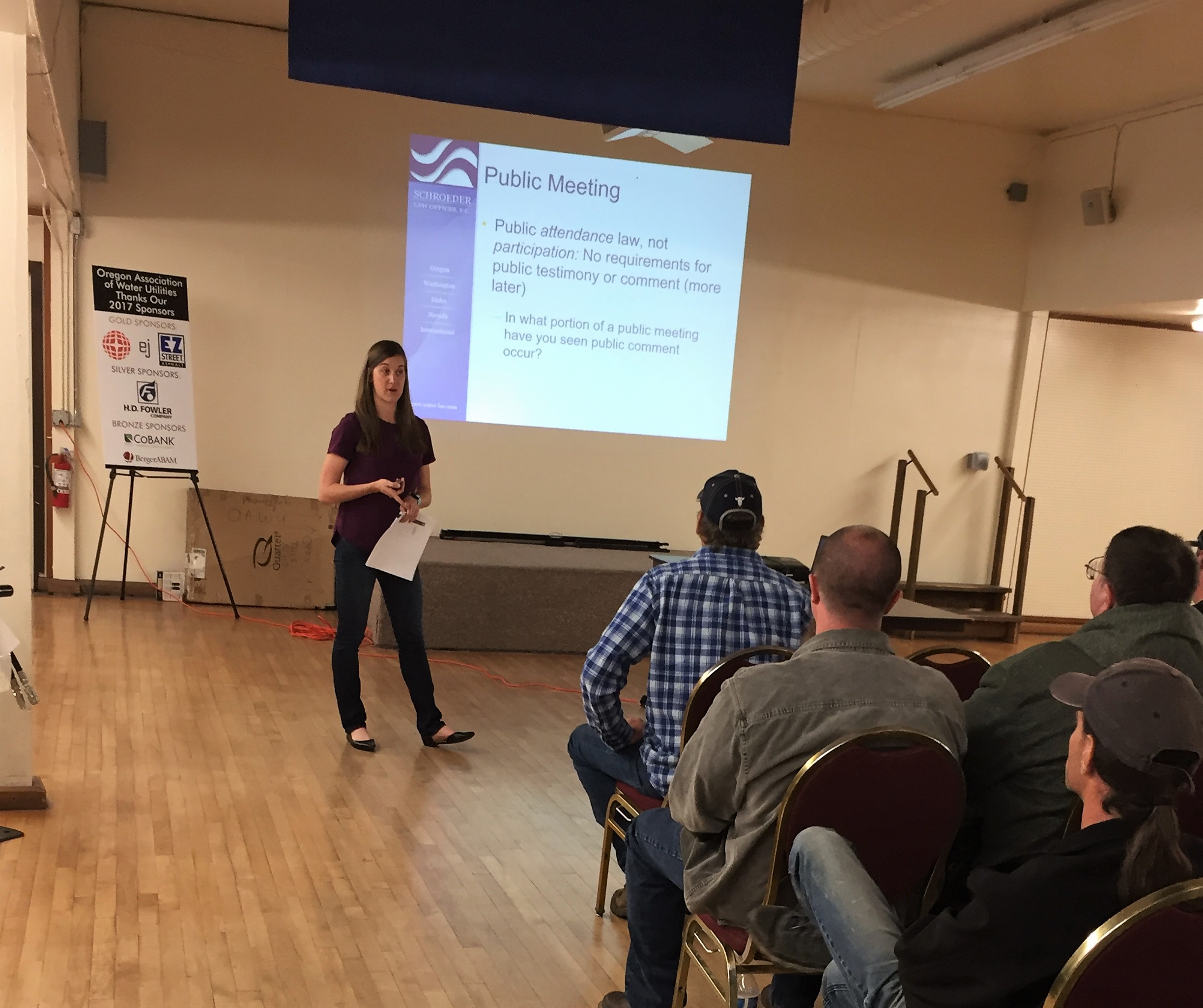
Attorney Lindsay Thane at OAWU's 3rd Annual Mini Expo

On Wednesday, May 16, attorney Lindsay Thane and paralegal Rachelq Harman attended the Oregon Association of Water Utilities’  (OAWU’s) 3rd Annual Mini Expo in Rickreall, Oregon. At the Expo, they had the opportunity to meet with representatives from water districts and municipalities from across the state of Oregon. Lindsay taught an hour-long class on public meeting laws and regulations. The presentation highlighted some of the aspects of community involvement that aren’t always at the forefront of our minds. Lindsay and Rachelq also manned the Schroeder Law Offices booth, where they were able to talk one-on-one with attendees and provide some very useful water conversion magnets to boot.

Attorney Lindsay Thane at OAWU's 3rd Annual Mini Expo
Attorney Lindsay Thane teaches Expo attendees about the finer details of Public Meeting Law

While the Mini Expo is now past, OAWU puts on events year-round. You can find their events calendar here. Schroeder Law is keeping busy too! Classes and seminars are scheduled throughout the summer. You can check out the complete list here.

Stay tuned to Schroeder Law Offices’ Blog for more news and events!


Schroeder Law Offices Shows its Support for Local Students and Parks

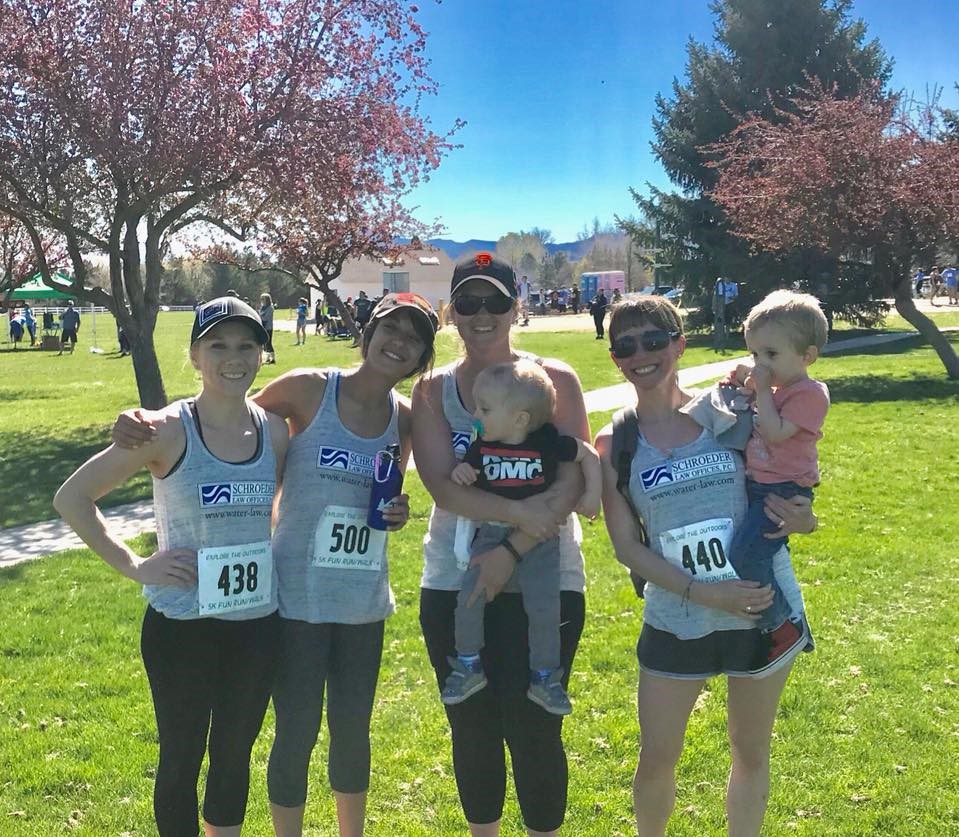
On April 21, 2018, Schroeder Law Offices showed its support for a local Student Stewards Summer Camp by participating in the 2nd Annual Healthy Parks Healthy People 5K Fun Run/Walk.

The proceeds from the Fun Run/Walk are being used to allow students to attend the 2018 Student Stewards Summer Camp where kids will learn about, and participate in, programs relating to the environment such as “Fish out of Water,” “Mighty Pollinators,” and “Rolling Stones.”

Schroeder Law Offices is an avid supporter of the wise use of our natural resources and activities that connect human and environmental health. As we enter Spring and the weather is warming up it is the perfect excuse to get outside and get active. Stay tuned for Schroeder Law Office’s next race!


ESPA Achieves Record Recharge

ESPA

For over half a century, the question of how to conserve and replenish water in Idaho’s largest aquifer, the Eastern Snake Plain Aquifer (ESPA), has been on the collective minds of the state’s water users. Serious droughts in the 1990s increased pressure on the ESPA resource, and preliminary recharge efforts were unsuccessful. Finally, in 2009, the ESPA Comprehensive Aquifer Management Plan, otherwise known as CAMP, was signed into law. CAMP’s goal is to annually recharge 100,000 acre feet (af) during the first ten years of the plan’s implementation, followed by 250,000 af per year thereafter.

The recharge comes from a combination of sources. The Idaho Department of Water Resources (IDWR) also supports canal companies and irrigation districts recharge projects, rotations and efficiency reductions.

ESPA

The 100,000 af goal was not quite reached in the first few years. Recharge was roughly 75,000 af in both the 2014-2015 and 2015-2016 seasons. However, the 2016-2017 saw 317,000 af returned to the ESPA, far exceeding the 100,000 af goal. The 2017-2018 season is shaping up to be even better. Over 350,000 af have already been replenished.

ESPA’s recharge success is good news for the residents of southern and eastern Idaho, and Idaho in general, as roughly 25% of Idaho’s economy is dependent upon agricultural output from the region. Unfortunately, CAMP’s success in the ESPA has not been matched by similar programs throughout the state and region. The Rathdrum Prairie Aquifer (RPA) in the northern part of the state, which is responsible for roughly 8% of Idaho’s production of goods and services, has a CAMP program in place. However, the RPA has not been nearly as successful as the ESPA at achieving substantial recharge. Another CAMP program has been proposed for the Treasure Valley, but has been delayed due to ongoing discussion between legislators and constituents.

In Washington, the Odessa Groundwater Replacement Program (OGWRP) was implemented to reintroduce water back into the Odessa Aquifer. Several initiatives under the umbrella of this program have been enacted, and have had reasonable success. However, efforts have focused more on limiting usage of the aquifer rather than reintroducing water back into it. Oregon has also taken steps to encourage recharging of its aquifers. However, as illustrated by the attempts in the Umatilla Basin, these programs have struggled to achieve significant recharge.

CAMP’s success did not come overnight. As with any major experimental project, it took decades of planning, communication, and compromise to achieve the ESPA’s level of recharge. Nonetheless, the potential for aquifer recharge demonstrated is inspiring, and will hopefully pave the way for similar projects throughout the West.

Stay tuned to Schroeder Law Offices’ Water Law Blog for more news and events!


Water Week in the United States, April 15 – April 21, 2018

Written by Alyssa Holland, Lisa Mae Gage, and Lisa Kane

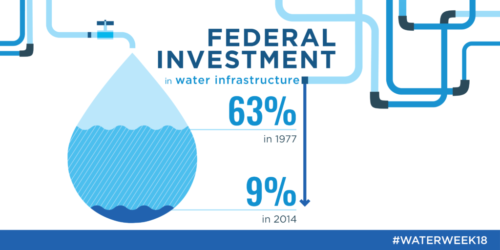
Water Week 2018 is currently underway as water organizations across the country gather in Washington, D.C. to advocate the importance of water protection and conservation with hopes of ultimately elevating water to a national priority. Organizations in the water sector are using Water Week to ramp up their efforts to educate policymakers about the need for funding to benefit water infrastructure. Many organizations are collaborating for Water Week, including National Association of Clean Water Agencies (“NACWA”), Water Environment Federation (“WEF”), American Water Works Association (“AWWA”), and the National Water Resources Association (“NWRA”), for example.

Water Week 2018 A few main events will take place during Water Week:

  • On April 17-18, 2018 the National Policy Fly-In:
    An event to provide the public with the opportunity to voice concerns and challenges to their policy makers.
  • April 17-19, 2018: Water and Wastewater Equipment Manufacturers Association (“WWEMA”) 45th Washington Forum:
    “Effectively Communicating Change at the National, State, and Local Level,” a discussion regarding changes happening in Washington, D.C. and to the nationwide water infrastructure, environmental and public health protection, and legislative and regulatory changes that will impact the water sector.
  • On April 19, 2018 the WateReuse Association Water Week 2018 Congressional Briefing:
    Four (4) different communities across the country will be highlighted for their use of water recycling and the local economic benefits that encourage other communities to do the same.

While each organization has a slightly different mission, each has a goal of advancing education regarding water issues and returning to their communities with the priority of educating the general public on the same issues. One of the main events, the Congressional Briefing, will directly discuss tools used in arid states (such as one of our main states of practice, Nevada) to address water scarcity and a way for communities to better manage their local water resources to help spur economic growth and plan for the future.

Schroeder Law Offices Nevada attorney Therese Ure also attends and hosts local conferences in Nevada to continue education regarding how to support the community’s resource challenges and even more particularly, how to support Northern Nevada’s agriculture industry. Click here to see our coming events for local education on the topic. Although attending these events may not be a possibility for everyone, we should all use Water Week as a time to reflect on how valuable water is to our everyday lives and to look for ways to conserve and protect water within our own communities.


Increased Spill Beginning at Federal Columbia River Power System Dams

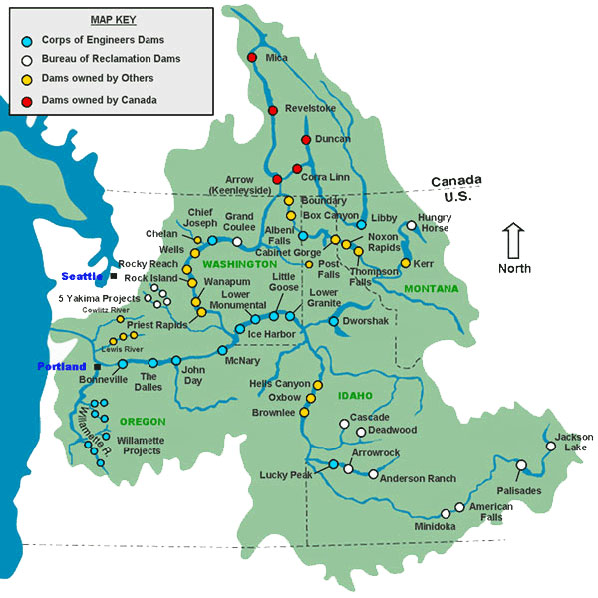
The Ninth Circuit Court of Appeals affirmed a U.S. District Court opinion requiring the Army Corps of Engineers to increase spill at dams on the Federal Columbia River Power System (“FCRPS”) to the maximum spill levels that still meet total dissolved gas criteria allowed under state law. The increased spills required by the District Court’s order and affirmed by the Court of Appeals began on April 3, 2018. The Court of Appeals’ decision is available here.

The Court of Appeals’ decision in National Wildlife Federation v. National Marine Fisheries Service is the most recent decision in this case, which has been ongoing since 2000. The decision stems from a challenge to the National Marine Fisheries Service’s (“NMFS”) 2014 Biological Opinion (“BiOp”) that concluded operation of the FCRPS dams would jeopardize salmon and steelhead species (“listed species”) listed under the Endangered Species Act (“ESA”). Because NMFS’s BiOP concluded operation of the FCRPS dams would jeopardize the listed species, pursuant to NFMS responsibilities under the ESA, NFMS proposed an alternative action that included, among other measures, some spill over the FCRPS dams as a means to avoid jeopardizing the listed species.

However, in 2016 the District Court found NMFS’ violated the Endangered Species Act when NMFS concluded the alternative in the 2014 BiOp did not jeopardize the listed species. The District Court gave NMFS until March 1, 2018 to issue a new BiOp. (This deadline was later extended to December 31, 2018.) However, in January 2017, the plaintiffs moved for injunctive relief, requesting the District Court order additional spill at the maximum level from April through June at dams along the FCRPS. In April 2017, the District Court granted plaintiffs’ injunctions and ordered increased spills to take effect April 3, 2018. The District Court’s decision was appealed to the Ninth Circuit Court of Appeals.

The Court of Appeals issued its decision upholding the District Court’s order requiring increased spills on April 2, 2018, the day before the increased spills were to begin. The Court of Appeals found the District Court did not err under the ESA in finding the plaintiffs had shown the listed species would suffer irreparable harm sufficient to order the increased spill. Nor did the Court of Appeals find it error that the District Court analyzed the harm that would be caused to the listed species in operation of the FCRPS dams as a whole, rather than focusing only on the spill related components of the BiOp alternative NMFS selected.

As irrigation season begins in the areas of the Columbia and Snake Rivers that rely on the water flowing through the FCRPS, and as the increased spills begin to take effect, some congressional leaders in the affected states are attempting a congressional solution to negate the effects of the court decisions. House Bill 3144, introduced by Representative Cathy McMorris Rodgers (R-WA) in June 2017, reported out of the House Committee on Natural Resources on April 11, 2018. It remains to be seen if and when H.R. 3144 may be scheduled to be heard on the floor of the House of Representatives; however, the Court of Appeals’ decision has, and any outcomes from H.R. 3144 will have, immediate impacts on water rates and utility rates for irrigators and residents throughout the Pacific Northwest. H.R. 3144 is available here.

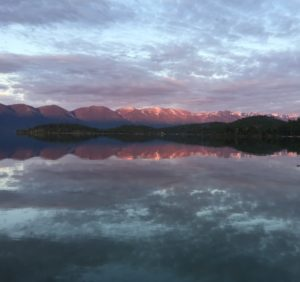
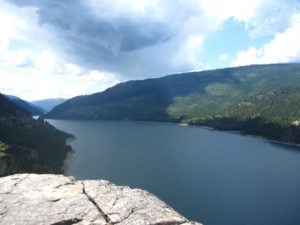
(Photo: Lake Koocanusa, Libby, MT)


Ninth Circuit Upholds Groundwater Conduit Theory

On February 1, 2018, the Ninth Circuit Court of Appeals upheld the “groundwater conduit theory,” whereby a discharge of pollutants into groundwater that is fairly traceable to a navigable surface water is the functional equivalent of a discharge directly into the navigable water body for the purpose of regulation under the Clean Water Act. This argument has been proffered many times in the past, but prior to this case this theory had, at best, narrow and limited success. The full Ninth Circuit case is available here.

The case involved the County of Maui, Hawaii and its wastewater treatment plant. The plant uses four wells as its primary means of disposing effluent into groundwater and the Pacific Ocean. The County injects three to five million gallons of treated wastewater per day into its wells, and, according to the County’s expert, when the County injects 2.8 million gallons of effluent per day, the amount of effluent that reaches the ocean is 3,456 gallons per meter of coastline per day. The Court stated this is “roughly the equivalent of installing a permanently-running garden hose at every meter along the 800 meters of coastline.”

Discharges of pollutants may be authorized by permit under the Clean Water Act’s National Pollutant Discharge Elimination System (“NPDES”). Jurisdiction under the Clean Water Act requires three things: 1) addition of a pollutant 2) to a navigable water 3) from a point source. This case focuses on the third requirement. Clean Water Act cases hold that a point source is a discernible, confined, and discrete conveyance, which in a lot of cases really means a pipe, ditch, or canal.

Wells do not directly connect to navigable water (in this case, the Pacific Ocean). Instead, the water injected into wells must travel through groundwater to reach the ocean. In 2013, the EPA, Army Corps of Engineers, Hawaii Department of Health, and University of Hawaii conducted what is called a “tracer dye study.” Essentially, they put dye into the wells and then monitored the ocean for the dye. At its conclusion, the study found a hydraulic connection between two of the wells and the ocean.

The Ninth Circuit concluded that point source discharges that travel indirectly through groundwater to a navigable water, is a violation of the Clean Water Act if the discharger does not have a permit. The Court reasoned that “this case is about preventing the County from doing indirectly what it cannot do directly.” Since the County could not build a waste pipe that emptied directly into the ocean without a permit, it could do so indirectly through its wells to avoid the requirements of the Clean Water Act. 

There are currently cases before the Fourth and Sixth Circuits which also implicate the groundwater conduit theory. If the holding by the Ninth Circuit is adopted by other Circuits, it will represent a change for the NPDES permitting program and regulation under the Clean Water Act. On the other hand, if a split develops in the Circuits, it may lead to litigation in the United States Supreme Court.

Stay tuned to Schroeder Law Offices’ Water Law Blog for more water news!

This article was drafted with the assistance of Law Clerk Derek Gauthier, a student at Lewis & Clark Law School.


Schroeder Law Hosts Lewis & Clark “1L” Reception

On Thursday March 15, 2018, Schroeder Law Offices’ Portland office hosted first year law students for an annual “1L” (first year law student) reception, to learn more about our office and our water law practice. The students met with each attorney, Sarah Liljefelt, Laura Schroeder, and Lindsay Thane to learn about each of their practices at SLO. Next, Schroeder Law held a social gathering that allowed the law students to meet with the entire office.

The 1L reception program allows first year law students to tour multiple law firms, learn more about what each firm does, and begin to think about their career goals after law school. It also provides a “foot in the door” with potential employers for summer law clerk positions and eventual associate positions.

If you or someone you know is looking for a summer law clerk position and is currently a 2L or 3L student, Schroeder Law Offices’ Portland office is currently hiring. Click here to learn more.


Daylight Saving Starts March 11, 2018, But Where Did It Come From?

Apparently there are several theories of how and why we started changing our clocks for daylight saving. Many people think it originated to allow children to help their families with farm work before having to go to school for the day. Another popular theory is that it was suggested by Benjamin Franklin in 1784 when he wrote a letter to the Journal of Paris advocating that if people woke up with the sun it would result in saving energy and resources in the need for candles.

According to National Geographic and David Prerau, author of Seize the Daylight: The Curious and Contentious Story of Daylight Saving Time, the idea of the modern concept of daylight saving was actually derived from George Hudson, an entomologist from New Zealand. In 1895 Mr. Hudson proposed a 2 hour time shift with the intention of having more sunlight after his day job to go bug hunting in the summer months.

The British Broadcasting Corporation attributes the modern day concept of daylight saving to British builder William Willett. Mr. Willett was horseback riding on a summer morning in 1905 and noticed how many curtains were drawn against the sunlight. His solution was to move the clocks forward before summer began. In 1907, Mr. Willett published a pamphlet called “Waste of Daylight” suggesting clocks be turned forward by 4 weekly twenty minute increments in April and reversing the same way in September. British politicians in favor of Willett’s suggestion proposed a Daylight Saving Bill, however it was defeated in 1909.

Author Prerau explains that the idea actually caught on during World War I when the German government started looking for ways to conserve energy. Because coal power was so predominant at that time, daylight saving really did result in saving energy. Germany adopted the system and soon after the United States, as well as nearly every other country fighting in the war began using the time change.

Although Benjamin Franklin may have identified the need for and the benefits of adjusting clocks, it appears we can thank George Hudson and William Willett for our modern day concept of daylight saving.


World Water Day 2018

World Water Day is an event hosted annually by the United Nations on March 22nd. Each year the event has a theme, and 2018’s theme is “Nature for Water.” Events surrounding World Water Day will focus on nature and how we can use our natural resources to overcome the water challenges of the 21st century. There are water-related crises occurring around the world caused by both environmental damage and climate change. World Water Day 2018 will explore how nature-based solutions have the potential to solve many of the challenges we currently face as a global society. Click here for a list of events occurring for World Water Day across the globe.

The headline facts for World Water Day this year focus not only on water demand, but water availability and water quality. Here are a few of their headline facts on water demand, availability, and quality:

  • Demand: 2.1 billion people lack access to safely managed drinking water services
  • Availability: Today, around 1.9 billion people live in potentially severely water-scarce areas. By 2050 this could increase to around 3 billion people.
  • Quality: Globally, over 80% of the wastewater generated by society flows back into the environment without being treated or reused.

World Water Day 2018

In the United States, most regions have water districts and agencies that oversee water use as well as its reuse, helping to replenish local resources while monitoring for drought or scarcity issues. While this may be true for our country, United Nation’s Water (“UN Water”) works to bring awareness to those places in which regulations are not as well-monitored or addressed, and also brings awareness to improvements that can be made in developed regions. While World Water Day 2018 will bring focus to these issues, more research is required for solutions that impact all corners of the globe. On March 22nd, expect the World Water Development Report to be released highlighting the performance, impact, and scalability relevant to the nature-based solutions thus far.

The UN Water online database contains resources regarding sustainable development goals for clean water and sanitation for further information.


March 11-17 is National Groundwater Awareness Week

Groundwater is one of the world’s most essential natural resources! According to the United States Geological Survey department (“USGS”) groundwater makes up approximately 1/3 of the public drinking water supply delivered though our county and municipal systems. For rural populations not connected to county or city delivery systems, groundwater makes up about 90% of their drinking water. USGS also reports that groundwater provides over 50 billion gallons per day for agricultural use in the United States. Groundwater pumping has been steadily increasing. In some basins groundwater is being extracted at a faster rate than the basin can recharge. As we are seeing in many states, this excessive pumping can lead to wells drying up, water level decline in hydraulically connected streams and lakes, reduction in water quality, increased costs associated with pumping, and subsidence issues crossed by the loss of water supporting our ground and soils.

The National Groundwater Association (“NGWA”) encourages everyone to participate in National Groundwater Awareness Week. According to NGWA, this year’s theme is “Test. Tend. Treat” to encourage a more holistic approach to groundwater conservation. NGWA is encouraging others to share their stories during this week on social media using the hashtag #GWAW2018. If you are looking for other ways to get involved and promote ground water awareness, the USGS and other water organization have provided some ideas (http://groundwaterawarenessweek.com/). During 2018 National Groundwater Awareness Week, let’s evaluate our own water use and identify ways we can help protect this valuable resource!


Hydropower Relicensing and Compliance with an Emphasis on Engagement

Photo Credit: ‘Dam’ by Jim Handcock

Hydropower relicensing and compliance has become a process of constant adaptation and engagement, both with regulatory agencies and with stakeholders. Both adaptation in the licensing and relicensing process and engagement early and frequently helps hydropower facilities better anticipate and adapt to a regulatory process that undergoes many changes in the life of a hydropower license and even in the multiple years (or decades) it can take for relicensing.

Common themes at the Northwest Hydroelectric Association Conference last week in Portland included the importance of engagement with the Federal Energy Regulatory Commission (FERC) when undertaking relicensing, even in pre-filing phases, to determine the scope of a facility’s study plan. This focus on engagement with FERC is largely driven by the Integrated Licensing Process that requires more pre-filing consultation and involvement with FERC and other resource agencies and stakeholders, such as Indian Tribes, rather than the Traditional Licensing Approach in which review and consultation are a sequential process.

Not only is engagement critical, and now required by FERC, but it helps hydropower projects better adapt to changing natural resource protection requirements during the relicensing process. National Environmental Policy Act (NEPA) compliance continues to require extensive analysis in the pre-filing process to conduct scoping with FERC and the resource agencies. Throughout the regulatory workshop, participants emphasized that hydropower facilities’ staff can effectively manage issues, such as invasive species, and will have a better grasp of their license conditions to ensure compliance with and adaptability to license conditions once a license is issued if there is engagement.


Reclamation Roundtable: Storage is Key

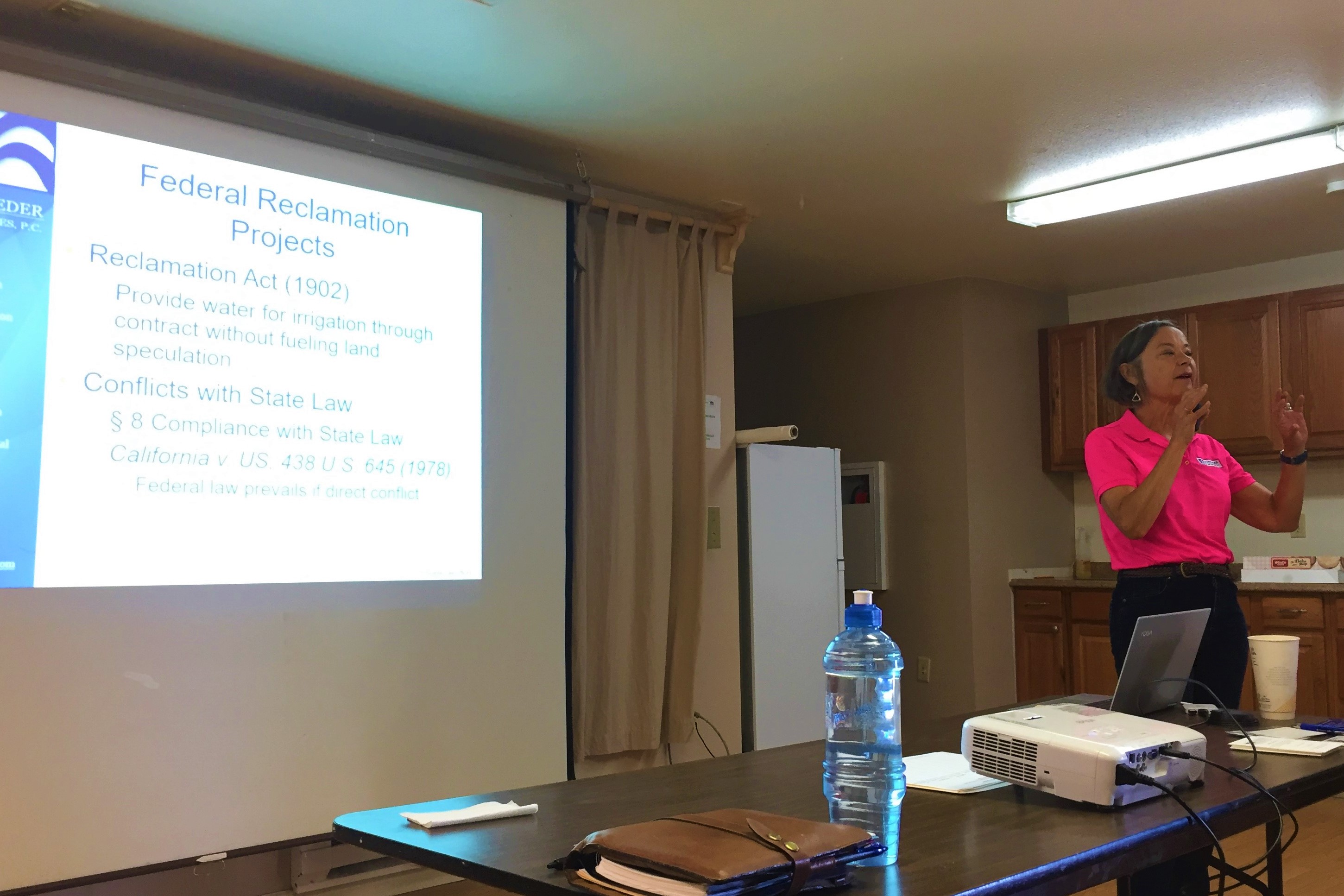
Schroeder Law Offices’ attorney Therese Ure is in attendance at the 2018 Family Farm Alliance Conference in Reno, NV and was present for the Reclamation Roundtable wherein Commissioner Brenda Bunman addressed the Family Farm Alliance (“FFA”) membership goals regarding conveying Reclamations under the current administration. Key points of the FFA goals include: 1) creating infrastructure to provide water security and reliable energy; 2) reinvesting to modernize existing infrastructure, and considering creative ways to pay for theses project (welcoming ideas and comments); 3) streamlining projects from the way they are managed to streamlining of the NEPA process; 4) collaborating to create new ideas, listening, sharing, and being transparent; and 5) creating a culture at Reclamation of safety, respect and civility.
FFA Conference
Other key points in the Reclamation Roundtable with all the regional directors included a water forecast for 2018, discussion of what current storage will secure or not secure, and how to deal with long term planning by:

  • a) creating additional storage through raising dams;
  • b) investigating new storage locations (new dams); and
  • c) aquifer storage and recovery projects (underground storage) undergoing feasibility studies, working on creative ways to deal with ESA issue, and collaborating with stakeholders.


Oregon Water Resources Department’s Development Program

Do you need funding for a water related study or water use project? The Oregon Water Resources Department’s Development Program is part of Oregon’s 2017 Integrated Water Resources Strategy. The program helps individuals and communities address instream and out-of-stream water needs now and into the future by providing funding opportunities for planning and investing in water use projects. The program is now accepting applications for two funding opportunities: Water Project Grants and Loans and Feasibility Study Grants.

Water Project Grants and Loans are available for instream and out of stream water supply projects that result in economic, environmental, and social/cultural benefits. Loan application materials can be found here, and are due by 5PM on April 25, 2018.

Feasibility Study Grants provide funding to help evaluate the feasibility of a proposed conservation, reuse, or storage project. A grant can provide up to 50% of the total costs of the study, but no more than $500,000 per project. Application materials can be found here, and are due by 5PM on October 17, 2018. 

For more information regarding these funding opportunities please visit the Water Resources Department page.


WOTUS Rule Litigation Update

In 2015, the Environmental Protection Agency (“EPA”) and U.S. Army Corps of Engineers (“Corps”) issued a joint administrative rule, the “WOTUS Rule,” attempting to define the statutory term “waters of the United States” within the Clean Water Act (“CWA”) in order to more clearly define the agencies’ jurisdiction. Schroeder Law Offices summarized the background and scope of the WOTUS Rule in a 2015 blog. The WOTUS Rule was stayed in 2015. Three year later, and after a ruling from the Supreme Court of the United States, litigation over the WOTUS Rule continues. 

On January 22, 2018, the United States Supreme Court issued its unanimous opinion, written by Justice Sotomayor, which settled the jurisdictional question of where challenges to the WOTUS Rule must be filed. The Court held that challenges to the WOTUS Rule must occur in federal district court rather than courts of appeals. The case was remanded to the Sixth Circuit and dismissed for lack of jurisdiction.

This decision by the Supreme Court will likely prolong litigation on the merits of the WOTUS Rule because a decision by a district court for either party is likely to be appealed. Environmentalists have applauded the proposed changes in the rule, while coalitions like the American Farm Bureau Federation and American Petroleum Institute have said the rule will stifle economic growth and add burdensome regulation on farmers and business owners because of expansion of CWA jurisdiction.

On July 27, 2017 the EPA and Corps published a notice of a new proposed rulemaking in the Federal Register. The agencies proposed to replace the stayed 2015 WOTUS Rule with their pre-2015 regulatory procedure. The agencies solicited public comment on the proposed procedure, although, making clear they did not seek public comment on the substance of the pre-2015 rule.

On February 6, 2018, the agencies published the final rule in the Federal Register. The final rule suspends the applicability of the 2015 WOTUS Rule until February 6, 2020. The agencies assert that the suspension of the rule gives agencies the time needed to reconsider the regulatory definition of “waters of the United States.” As reported by Capital Press, the same day the agencies published their final rule a lawsuit was filed by the Attorneys General of New York, California, Connecticut, Maryland, Massachusetts, New Jersey, Oregon, Rhode Island, Vermont, Washington and the District of Columbia in the Southern District of New York. Another lawsuit was filed by numerous environmental groups in Charleston, South Carolina District Court. Both lawsuits challenge the two-year delay in applicability of the WOTUS Rule.

The attorneys general and environmental groups both take the same positions on two issues in their complaints. First, the parties allege the agencies failed to provide meaningful opportunity for public comment in violation of the Administrative Procedure Act (“APA”) because the agencies solicited comments solely on the procedure of the rule, proscribing comment on the substance of the pre-2015 rule. Second, the parties allege the agencies failed to consider all the relevant issues and offer a rational explanation for the suspension of applicability rule, another alleged violation of the APA.

The attorneys general and environmental groups differ in their last claim, however. The attorneys general claim that the CWA does not give the agencies authority to suspend the WOTUS Rule after its effective date passed. The environmental groups claim the agencies violated the APA by failing to publish the pre-2015 rule in the Code of Federal Regulations.

Stay tuned as Schroeder Law Offices brings you updates!

This article was drafted with the assistance of Law Clerk Derek Gauthier, a student at Lewis & Clark Law School.


Schroeder Law Offices Announces Newly Hired J.D. Paralegal!

Jakob Wiley

Schroeder Law Offices is excited to announce that Jakob Wiley will be joining the firm as a J.D. Paralegal this fall. He plans to later continue with the firm as an Associate Attorney at the Portland location after passage of the July, 2018 Oregon bar examination. He will receive a J.D. from the University of Oregon School of Law in May, 2018 and will also complete a concurrent M.S. in Water Resources Policy and Management at Oregon State University. His studies focus on aquifer governance, voluntary management agreements, and transboundary aquifer policy.

Jakob grew up in Fallon, Nevada on his family’s alfalfa farm and cattle ranch. Jakob enjoys hiking and ocean fishing near his parents’ new home near Toledo, Oregon. Jakob also enjoys traveling to Germany and Switzerland in his free time. He is excited to join the Schroeder team working to solve your water issues!


Washington Reclaimed Water Rule Adopted

On January 23, 2018, after more than 10 years of discussion and revision, the Washington Department of Ecology adopted the Reclaimed Water Rule. The Rule will go into effect on February 23, 2018. You can read the Rule in its entirety here.

Reclaimed water has long been used in the State of Washington for industrial, commercial, and construction purposes, as well as a way to replenish wetlands and aquifers. The Revised Code of Washington Chapter 90.46, put into effect in 1995, governs the acquisition, use, and treatment standards for reclaimed water, and establishes the permitting process for both wastewater discharge and reclaimed water use. The goal of the newly-enacted Reclaimed Water Rule is to work hand-in-hand with this existing legislation to streamline the process of acquiring permits and to make clear the methods and standards of treatment required in order for wastewater to be deemed acceptable for commercial, industrial, and institutional uses.

By making the route to reclaiming water more straightforward, the Department of Ecology hopes to encourage water users to limit their discharge of wastewater back into the environment and decrease overall draw from groundwater sources to preserve limited water resources, particularly during the dry summer months. If reclaimed water can be used in the place of potable water for purposes like flushing toilets or watering lawns, the impact of these activities can be substantially mitigated. A good overview of the potential uses and benefits of reclaimed water can be found on the Department’s website.

One of the main concerns about the Reclaimed Water Rule, and a major reason why it remained on the back burner for the better part of 12 years, is the potential for infringement upon senior water users’ rights. By reclaiming water that would otherwise flow into streams, lakes, or aquifers and reusing it without it being reintroduced into the originating source of water, the amount of water available to water right holders that had access to those “returns” could be diminished. As a result, the Rule was amended to include provisions for compensation and mitigation should such infringement occur; however, consistent with procedure for issuing all water right permits, no permits shall be issued to projects that impair the rights of senior water users.

While reclaimed water is not designated as drinkable, it is still subjected to strenuous testing and treatment processes similar to those which drinking water undergoes. Following initial treatment at a water treatment plant, wastewater is further filtered, disinfected, and repeatedly tested to ensure that it can be safely introduced into the environment. Once it has been approved as safe, reclaimed water can be used to irrigate crops, fight fires, clean streets, and control dust, among other uses. The Washington State Department of Health issued a “Frequently Asked Questions” memorandum last summer, (available on their website) that briefly details the public health protections covered in the Reclaimed Water Rule.

If you are interested in learning more about the Reclaimed Water Rule and the permitting process, the Washington Governor’s Office for Regulatory Innovation and Assistance has assembled an overview that provides greater detail about the Rule and the application process.

Stay tuned to Schroeder Law Offices’ Water Law Blog for more news!


Your Water Rights Are Valuable, Do You Really Have What You Think You Do?

By Therese Ure and Lisa Mae Gage

Many people are familiar with looking up water right information on Nevada Division of Water Resources (“NDWR”) database and are familiar with reading water right applications, permits and certificates. Is that information reliable enough to conclusively show what your water rights are? The answer is no. Several factors affect the reliability of information found on NDWR’s database and information listed on water right applications, permits and certificates.

NDWR Database

NDWR’s database is not always an accurate reflection of the current standing of a water right. While NDWR strives to maintain its database with the most current and accurate information, you must remember the disclaimer wherein NDWR provides no warranty regarding the accuracy, adequacy, completeness, legality, reliability or usefulness of the information contained within the database. The database is a useful tool to start your search, but it is by no means the last step!

Dual Recording System

Reviewing the database ownership records helps, but often times, water owners forget to “record” water ownership transfers with NDWR after completing the process with the County Recorder. Like the official real property records being maintained by the County Recorder, another set of official records for water rights of use are maintained by NDWR. NDWR updates ownership of water rights, not land, but only upon notification by the water right owner. NDWR has no knowledge of the water use change in ownership until the new owner directly notifies NDWR by filing a Report of Conveyance. Oftentimes new water right holders are unaware of their responsibility to separately notify NDWR of a change in ownership of water rights and therefore NDWR’s listed owner of record may not be accurate.

Water title transfer histories can become vague and confusing, especially when land is subdivided or water rights are expressly transferred off the original place of use property. Following the chain of title of the water rights may take a great deal of time and effort. Most County Recorder offices are updating their systems to allow viewing of recorded documents online, however, research of older documents often times requires physical research and inspection at the County Recorder’s office.

Changes in Water Right Elements

A water right Certificate outlines the elements of a water right at the time it was issued, however these elements can be changed over time. Some of the main “elements” include the source of water, how and when the water can be used, where the water can be used, and the rate and duty the water use. After a permit or certificate is issued, change applications can be filed changing all or a portion of the water use. A water right holder can sell a portion of the right, subsequent permits and/or certificates can be issued for water that is stacked or comingled with the initial water right, or portions of water rights can be lost through cancellation, abandonment and/or forfeiture. It is important to review the entire water right file to verify if any elements of the water use elements have been changed.

Basin Wide Orders

The State Engineer administers water rights in the state of Nevada. Many of the hydrographic groundwater basins are over appropriated and in need of close monitoring. The State Engineer often times issues orders related to groundwater basins that may change terms or add additional requirements to a water use that were not originally listed on the Permit or Certificate. Reviewing information concerning the basin as a whole is an important tool to determining impacts to individual water rights.

It’s no question that water rights are and will always be a very valuable resource. Water right elements, terms and requirements can change over time. While we have outlined a few of the diligence items, often times there is more research that is required. Ensuring water use holders know the terms and conditions of their use will help them stay in compliance in order to continue beneficial use.


Study: Willamette Valley Project Reallocation

In November 2017, the United States Army Corps of Engineers (Corps) published the Willamette Basin Review Feasibility Study, Draft Integrated Feasibility Report and Environmental Assessment (Study). The purpose of the Study (which can be viewed in its entirety here) is to evaluate the reallocation of 1,590,000 acre-feet of Willamette Valley Project stored water. The Study analyzes current and future water demand in the Willamette basin to determine how the water should be reallocated. The analyzed demand uses include agricultural irrigation, municipal and industrial water supply, and conservation storage for Endangered Species Act listed fish. 

The Corps constructed a series of thirteen federal reservoirs in the middle and upper Willamette Basin beginning in the 1930s. Currently, the water is stored under Bureau of Reclamation water use rights that authorize storage for irrigation. The Corps’ proposal would reallocate 962,800 acre-feet of water to fish and wildlife. This discrete category has been allocated the most water in the draft Study, followed by agricultural irrigation at 253,950 acre-feet, and municipal and industrial with the least at 73,300 acre-feet.

For those keeping score at home, those figures do not add up to the allocated 1,590,000 acre-feet. The Corps chose to earmark 299,950 acre-feet to what the agency is classifying as “joint-use.” Joint use allocation is water that can be assigned to any of the other three discrete categories. Thus, the Corps would simply hold that amount in reserve to accommodate “unforeseeable changes to demand trends.” Simply put, this provides the Corps flexibility in the future to disperse water according to demand while simultaneously allowing the agency to avoid allocating all of the water at the current time.

While everyone can agree more water available for appropriation is a good thing, some are unhappy about the way the Corps has proposed to allocate stored water. The Capital Press reported the Oregon Farm Bureau’s position is that water allocated to agricultural irrigation is “not nearly enough.” 

There is still much uncertainty about what will happen next and how long the process will take before water stored in the Willamette Valley Project is available for appropriation. The Study is currently a draft environmental assessment under the National Environmental Policy Act (NEPA). Therefore, the Corps is still in the stage where it is developing and evaluating the alternatives. The comment period on the draft Study closed on January 5, 2018.

If the Corps finds no significant impact from the chosen alternative action in the NEPA process, water will then need to be reallocated to the proposed uses. Because the Bureau of Reclamation currently holds the water right certificates that authorize storage for irrigation, the federal agencies must go through the Oregon Water Resources Department’s transfer review process to change the purposes of use for the Project storage rights.

Only after the water use rights authorizing storage in the Project are transferred to the reallocated uses will the water be available for new appropriations in addition to the current authorized use, irrigation. The reallocation could stimulate a rush to the Oregon Water Resources Department’s office for application submission. As the old adage goes, “the early-bird gets the worm.” More aptly, those ready to file for a water right upon the successful completion of the impending process are more likely to get to obtain a much-coveted water use right from the reallocated storage.

Stay tuned to Schroeder Law Offices’ Water Law Blog as this process unfolds!

This article was drafted with the assistance of Law Clerk Derek Gauthier, a student at Lewis & Clark Law School.