Duck-Rice Farming

Image of Duck-Rice Farming

Duck-Rice Farming: An Ancient Practice with Modern Sustainability Benefits

For centuries across Asia, farmers have combined rice cultivation with raising ducks. This creates a system that benefits both agriculture and the environment. Known as aigamo in Japan, duck-rice farming can reduce the need for herbicides, pesticides, and fertilizer. It also gives rice farmers an additional source of income.

How Duck-Rice Farming Works
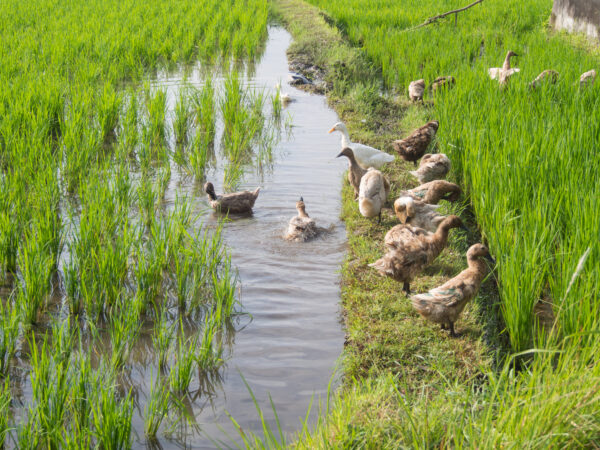
Image of Duck-Rice Farming

Duck-rice agriculture works by introducing young ducks into flooded fields after rice has been planted but before the crop fully covers the paddies. Because the ducks are still small and the rice plants are developing, the ducks generally ignore the crop, instead feeding on weeds and pests that threaten it.

The system lowers reliance on chemical inputs. Ducks help control pests and weeds, while their manure fertilizes the rice plants. That reduces the need for artificial fertilizers, pesticides, and herbicides that can harm surrounding ecosystems. Some farmers also incorporate fish and aquatic plants such as Azolla, or water fern, creating a small, productive ecosystem that further supports pest control and soil fertility.

By the time the rice plants mature enough to attract the ducks’ interest, the crop is well established and able to dominate the paddies, outcompeting weeds and pests. The ducks can then provide meat and eggs as secondary income streams. In systems that include fish, farmers may gain yet another marketable product or supplementary food source.

The United States as a Rice Producer

Although duck-rice farming is widely practiced across parts of Asia, it remains unfamiliar in the United States. The U.S. is one of the world’s leading rice exporters. But duck is not a major part of the average American diet compared with countries such as China, where duck consumption is much higher.

For farmers seeking more sustainable production methods, duck-rice farming offers a practical model. It reduces dependence on labor-intensive weeding, costly chemical inputs, and environmentally damaging practices while creating additional revenue opportunities. This ancient approach continues to align with modern ideas of organic agriculture, integrated farming, and permaculture.



Portland’s Big Pipe Project

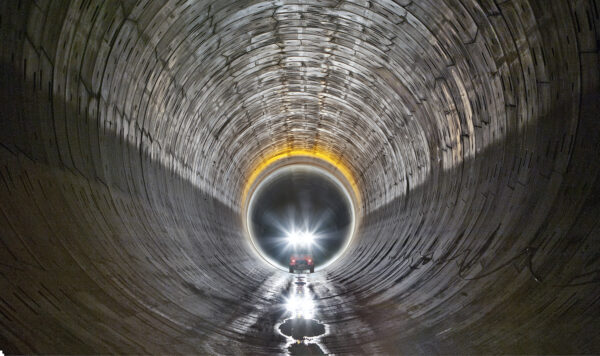
Photo inside Big Pipe

The City of Portland’s Big Pipe Project:

What it Does and Why it Maters

The City of Portland’s Big Pipe Project was a major effort to reduce the amount of pollution entering the Willamette River and the Columbia Slough. This project cost about $1.4 billion and took 20 years to finish. Thanks to this work, Portland has reduced combined sewer overflows (CSOs) by 94% into the Willamette and 99% into the Columbia Slough.

Even with these improvements, a few overflow events still happen during very heavy storms.


Why Stormwater Was a Problem Before the Big Pipe

Portland has a combined sewer system in many areas. That means sewage and stormwater flow through the same pipes. When big rainstorms hit, millions of gallons of stormwater rush into the system at once. Before the Big Pipe Project, this caused sewage and pollutants to overflow directly into local rivers many times each year.

To reduce this problem, the City first worked to keep stormwater out of the sewer system whenever possible. Beginning in 1991, Portland:

Photo inside Big Pipe
Courtesy of City of Portland Bureau of Environmental Services

  • Built new stormwater-only pipes
  • Redirected small streams into the Willamette River
  • Captured runoff from streets and buildings
  • Sent stormwater to Ramsey Lake, a constructed wetland that helps clean the water
  • Increased the use of trees, gardens, and other green spaces to absorb rain naturally

All these steps helped lower the amount of water entering the sewer pipes and reduced the chance of overflows.


How Portland’s Big Pipes Work

Portland now has three major “Big Pipes”:

  • Columbia Slough
  • West Side
  • East Side

Together they stretch 12.5 miles and carry combined sewage to the Columbia Boulevard Wastewater Treatment Plant. These pipes store and move huge volumes of water during storms so the treatment plant isn’t overwhelmed.

This system has greatly reduced the amount of untreated wastewater that reaches the Willamette River and the Columbia Slough.

However, during extreme weather—like the December 9, 2025 ‘atmospheric river’ storm, which dropped more than five inches of rain—the system can still reach capacity. When that happens, overflows may release polluted water into the river. The good news is that Portland now sees only about four overflow events per year, compared to around fifty before the Big Pipe Project was completed.


Conclusion

The Big Pipe Project was a huge, long-term effort involving city agencies, engineers, and the people of Portland. Since its completion in 2011, it has made the city’s rivers much cleaner and safer. While occasional overflows still occur during major storms, the combination of stormwater diversion, green infrastructure, and increased pipe capacity has made a major positive impact on local water quality.

Stay tuned to Schroeder Law Offices’ blog for more updates on water issues in the Pacific Northwest!