Oregon Drought Permits

The impacts of drought are felt by all, but perhaps none more than those who rely on water for their livelihoods. Amidst predictions of growing drought throughout Oregon, a timely primer on navigating the state’s Emergency Groundwater Use (Drought) Permit process.
Introduction to Oregon Drought Permits
When the well is dry, we know the worth of water. -Benjamin Franklin, Poor Richard’s Almanack
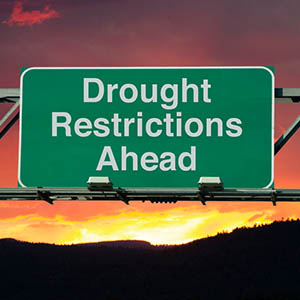
After experiencing the warmest winter in almost a century, Oregonians are bracing for the specter of drought conditions throughout many parts of the state in 2026. In late March of this year, Governor Tina Kotek signed an executive order declaring drought emergencies in three eastern Oregon counties: Baker, Deschutes, and Umatilla. The Governor’s declaration came months over three months earlier than the first similar drought declaration in Baker county in 2025. The last drought emergencies in Deschutes and Umatilla Counties occurred in 2023 and 2021, respectively.
Oregon Water Resources Department (OWRD) has resources available to help mitigate the challenges of drought emergencies. Among them is the water right permitting system for issuing Emergency Groundwater Use Permits, which are commonly referred to as drought permits (herein “Oregon Drought Permits”). This system authorizes the temporary use of groundwater during these declared drought emergencies, with the confines of the legal framework described below.
1. Legal Framework of Oregon Drought Permits
ORS 536.700 et seq. “Emergency Water Shortage Powers”
In Oregon, eligible water rights holders can apply for Emergency Groundwater Use Permits for Drought, established under Oregon Revised Statutes (ORS) 536.700 et seq. These sections codify the legal framework for “Emergency Water Shortage Powers” authorizing temporary flexibility in the regulation of water use during declared drought conditions.
Under ORS 536.740, the Governor may declare that a severe, continuing drought exists within a defined geographic area. Upon such declaration, the Director of Oregon Water Resources Department (OWRD) may authorize emergency water use. ORS 536.750 provides that OWRD may approve temporary use of water to replace water under an existing water right that is made unavailable due to drought. In so doing, OWRD is authorized to impose terms and conditions to protect existing water rights and the public interest.
OAR 690 Division 19 “Drought Mitigation”
Oregon Administrative Rule (OAR) 690, Division 19 “Drought Mitigation” implements ORS 536.700 et seq. The Rule becomes operative only during these extraordinary drought emergencies and only upon such declaration by the Governor. OAR 690-019-0040 governs the permit application requirements, approval process, and additional considerations for Emergency Water Use Permits.
2. Permit Requirements
Threshold Requirements
To qualify for an emergency groundwater use permit, an applicant must satisfy the threshold criteria set forth in OAR 690-019-0040(2); specifically, that (a) drought conditions have created an inability to obtain water under an existing water right, and (b) the technical and legal description of the proposed use is in a designated drought area.
No Enlargement
Importantly, the proposed use may only function as a replacement for and not an enlargement of an existing water right. ORS 536.750. To this end, OWRD must determine that the proposed use will not injure existing water rights or be either an impairment or detriment to the public interest. ORS 536.750(3).
Conservation and Curtailment Measures
OWRD retains discretion to impose additional requirements on applicants, including that the applicant submit a plan and evidence showing conservation and water use curtailment measures have been taken before use is made of an emergency use permit. OAR 690-019-0040(2)(c).
3. Approval Process for Oregon Drought Permits
Completeness Review
OWRD’s first step is to evaluate whether the application satisfies the application’s threshold requirements above, rejecting or returning incomplete applications. OAR 690-019-0100 proscribes the fees required for application.
Substantive Application Evaluation
During the substantive evaluation of the application, OWRD considers possible injury to existing water rights and public interest considerations, including the factors of OARs 690-310-0120 and 690-310-0130. OWRD also considers the term length and emergency nature of the request.
Public Notice and Comment
Notice of emergency use permits is included in OWRD’s regular public notice process, however, no contested case hearing under ORS 537.170 et seq. is required. OAR 690-019-0040(4)(a); ORS 537.170 (not applicable).
OWRD considers all public comments that the agency receives concerning the actual or proposed use under the emergency use permit. The agency continues to consider such comments throughout the entire life of the permit. OAR 690-019-0040(4)(b).
Decision and Issuance
If approved, OWRD issues the emergency use permit to the water user. By rule, OWRD is authorized to regulate the use of water under an emergency use permit at any time in accordance with the terms and conditions of the permit. OAR 690-019-0040(4)(c).
4. Additional Considerations
Mandatory Permit Conditions for Oregon Drought Permits
All emergency permits must include certain special terms and conditions.
- First, as above, water use under emergency permits must not constitute enlargement or otherwise injure existing water rights. Therefore, emergency permits are considered subordinate to all “prior water right permits, certificates, decreed rights, scenic waterway flows and minimum stream flows.” OAR 690-019-0400(5)(a).
- All emergency use permits are also time bound to not exceed one year or the term of the declared drought. OAR 690-019-0085(5)(b)&(d).
- Additionally, all such permits are required to impose rate, volume, and season limitations to not exceed the underlying water use right or extend the historical season of use. OAR 690-019-0040(5).
- Finally, OWRD is authorized to revoke the emergency use permit if injury to another water right occurs after issuance, unless the agency determines that the water user has sufficiently mitigated their injury. OAR 690-019-0040(5)(e).
Additional Requirements for State Agencies or Political Subdivisions
State agencies and political subdivisions that apply for emergency use permits are also required to either submit a water conservation or curtailment plan for approval by OWRD, or, when so directed by the Governor, implement a plan that has already been approved. OAR 690-019-0040(6)-(7).
Temporary and Conditional Nature
Oregon Drought Permits are strictly temporary and establish no permanent water rights. Accordingly, water use under these permits remains subject to regulation and curtailment by OWRD at any time. ORS 536.750; OAR 690-019-0040(4)(c). Permit renewals are governed by OAR 690-019-0085.
Conclusion
Oregon Drought Permits (Emergency Groundwater Use Permits) are special, narrow authorizations designed to provide temporary relief to existing water right holders in Oregon who experience the effects of declared drought emergencies. A successful application must establish the connection between the inability to obtain water under existing water right(s) to the emergency drought conditions. It must also provide the proposed use under the permit sought, while accepting OWRD’s terms and conditions on the use to avoid injury and protect the public interest.
Authorities
ORS 536.700 et seq.
https://www.oregonlegislature.gov/bills_laws/ors/ors536.html
OAR 690 Division 19
https://secure.sos.state.or.us/oard/displayDivisionRules.action?selectedDivision=3144
Additional References
OWRD Public Declaration Status Report
https://apps.wrd.state.or.us/apps/wr/wr_drought/declaration_status_report.aspx